better eggs start with better farming

CORN- & SOY-FREE, PASTURE-RAISED EGGS
Choose from 3 egg box sizes: Normal • Heritage Petite • Jumbo
Our Normal Egg Box is offered as a one-time purchase or through Subscribe & Save when new spots become available.
HERITAGE PETITE & JUMBO EGGS
AVAILABLE WEEKLY
Inventory is restocked every Friday at 4:30 PM ET. Quantities vary week to week depending on how many eggs our pasture-raised ladies lay.
NORMAL EGG BOX
CURRENTLY HAS WAITLIST
All normal-size eggs are currently going to existing subscribers. New subscription and one-time purchase spots are expected in November.
FREE TO JOIN • NO PURCHASE COMMITMENT
Low PUFA
Corn & Soy Free
Mobile Pasture-Raised
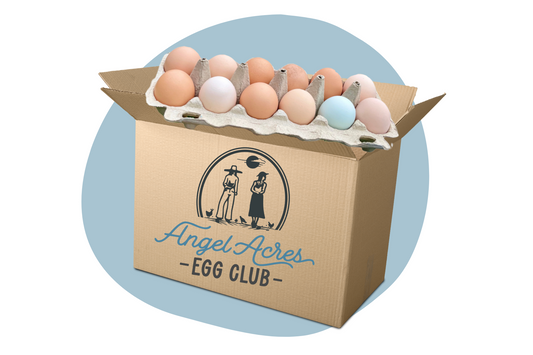
Corn- & Soy-Free Egg Box Corn- & Soy-Free Egg Box
Our signature 4-dozen box of large eggs. One-time purchase or Subscribe & Save 10% when spots open.
Low PUFA
Corn & Soy Free
Mobile Pasture-Raised
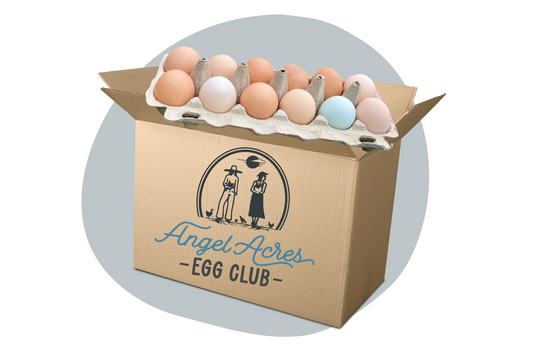
Heritage Petite Eggs Heritage Petite Eggs
Smaller eggs from our young pasture-raised hens. Limited quantities restocked weekly.
Low PUFA
Corn & Soy Free
Mobile Pasture-Raised
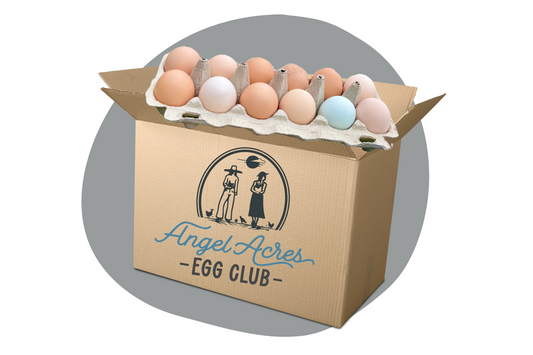
Extra-large eggs from our pasture-raised hens. Limited quantities restocked weekly.
 Low-PUFA
(Healthy Fats) Corn-, Soy-, &
Flax-Free Feed Mobile
Pasture-Raised No Drugs
or Vaccines No Pesticides,
No Seed Oils


- Low-PUFA
(Healthy Fats) - Corn-, Soy-, &
Flax-Free Feed - Mobile
Pasture-Raised - No Drugs
or Vaccines - No Pesticides,
No Seed Oils
MORE EGG CLUB SPOTS ARE COMING!
Demand for our one-of-a-kind, corn- and soy-free, low-PUFA eggs continues to exceed supply!
Instead of building bigger egg factories, we're carefully expanding our Egg Club by adding more small regenerative farms to our network.
Every new farm is trained in our mobile pasture-raised system and supplied with our custom corn-, soy-, and flax-free feed.
More small farms. Not bigger egg factories. ❤️
Join our free waitlist to be among the first notified when new Normal Egg Box subscription and one-time purchase spots become available! You'll also hear about occasional openings when existing subscribers skip a delivery.
FREE TO JOIN • NO PURCHASE COMMITMENT
WANT EGGS NOW? 🥚
While you wait for more Normal Egg Box spots to open, you can still enjoy our pasture-raised, corn- and soy-free eggs! Explore our limited weekly Heritage Petite and Jumbo Egg Box releases, plus Egg Bites and Liquid Whole Eggs.
OTHER CORN- & SOY-FREE EGG PRODUCTS

Low Ps™
Mobile Pasture-Raised
Corn & Soy Free
Pre-cooked, protein-rich egg bites made with our pasture-raised, corn- and soy-free eggs. Just heat and enjoy!

Low Ps™
Mobile Pasture-Raised
Corn & Soy Free
Corn & Soy-Free Liquid Whole Eggs Corn & Soy-Free Liquid Whole Eggs
Our pasture-raised, corn- and soy-free eggs, already cracked, mixed, and frozen for convenient cooking.
1 Quart

What Makes These Eggs Different?
Corn-, soy-, and flax-free eggs from pasture-raised hens on small regenerative farms.
Lab-Tested Health Benefits
- ✅ Healthier fats: 70% less metabolism-suppressing Linoleic Acid (an Omega-6 Polyunsaturated Fat, PUFA) than Vital Farms Organic Pasture-Raised Eggs
- ✅ Pesticide & Glyphosate free: while other Organic eggs have tested at 3X the EPA limit for glyphosate
- ✅ Drug free: no detectable drug residues which can impact immune & gut health
- ✅ Low in hormone-disrupting phytoestrogens, unlike soy & flax fed eggs, which can impact digestion & endocrine function
- ✅ More micronutrients: more Vitamins & Minerals since the chickens eat a balanced healthy feed ration and bugs, grasses and forms out on pasture (diet with more nutrient diversity!)
Why These Eggs Cost More
You’re not just buying eggs, you’re investing in:
- 🥚4 dozen low-PUFA eggs from small regenerative farms
- 📦 Convenient delivery to your door with protective packaging, FedEx shipping, and package protection included
- ❤️ The peace of real nourishment you can trust, with less oxidation, cleaner food, & more stable fats
why choose corn- and soy-free eggs?

lower pufa content
When chickens eat more PUFAs, more PUFAs show up in the eggs on your plate, and eventually more PUFAs buildup inside of you.
Since soy, soybean oil, corn byproducts like distiller grains and corn oil are common high PUFA feed ingredients, conventional eggs can contain as much PUFA as a tablespoon of canola oil. So, removing them from feed will definitely help! Unfortunately, many “corn and soy-free” feeds simply swap in other high-PUFA ingredients, defeating the purpose. That's why we made our own!
Due to our truly low-PUFA, corn- and soy-free feed, our eggs contain 73% less linoleic acid (an Omega 6 PUFA) and 70% less total PUFA relative to Organic Vital Farms eggs.
When chickens eat better, you eat better, and your body feels the difference.
lower oxidation levels
PUFAs are chemically unstable due to their multiple double bonds. When exposed to heat, light, or oxygen (like during cooking), they oxidize and break down into harmful compounds like MDA and lipid peroxides, increasing inflammation, oxidative stress, and cellular damage. Eggs from hens fed flax and soy-rich diets show higher levels of pre-cooking lipid oxidation, meaning damage starts even before the egg hits your pan.
It doesn’t stop there. PUFA oxidation also triggers cholesterol oxidation in the yolk, producing harmful cholesterol oxidation products linked to metabolic and cardiovascular issues. One study (r) found that consuming high-PUFA eggs accelerated LDL cholesterol oxidation by 28%: a clear sign of increased oxidative stress. Eggs higher in PUFAs also spoil faster, taste worse, and lose nutrients more quickly.
Our solution: a custom, low-PUFA diet that protects your eggs from oxidation before, during, and after cooking.
easier to digest
What if your egg allergy isn’t from the egg… but from how the chicken is raised and what the chicken eats?
Many of our customers couldn’t tolerate other eggs (even pasture-raised) due to bloating, skin flare-ups, or digestive issues. That changed with Angel Acres eggs.
Why?
It’s all about the feed. Soy proteins and corn residues can pass into eggs, both common allergens. Plus, PUFAs and phytoestrogens can irritate the gut lining and disrupt hormones. Our feed eliminates these allergy triggers and potential gut disruptors completely.
The way eggs were meant to be: gentle on digestion and deeply nourishing.
better hormonal balance
Phytoestrogens are plant compounds that mimic estrogen in the body. They’re known endocrine disruptors linked to estrogen dominance, thyroid dysfunction, and hormonal imbalance.
The highest sources are soy and flax. When chickens eat soy or flax, these compounds accumulate in their eggs, and end up on your plate.
Soy is common in chicken feed, but here’s what most people don’t realize: even many “corn- and soy-free” feeds use flax as a substitute, which is still rich in phytoestrogens.
That’s one of the biggest reasons we decided to make our own feed.
While animals pass on smaller amounts than if you ate soy or flax directly, phytoestrogens are fat-soluble, meaning they build up in tissues over time. That’s the real danger: not a single exposure, but chronic, compounding exposure.
Every little bit of exogenous estrogen we can avoid matters. Because day after day, year after year, it adds up.
In a PUFA-rich, estrogenic world, it’s no surprise testosterone is plummeting and hormonal issues are everywhere.
Your internal environment is shaped by what you eat.
And what you eat, eats.
The good news?
Studies show that soy-free and flax-free diets produce eggs with no detectable phytoestrogens. That means we can drastically reduce exposure simply by changing what livestock are fed
Animal products don’t have to be a source of phytoestrogens, but due to modern feed, many are.
That’s why we custom formulate our animal feed to be not just corn- and soy-free, but also flax-free and free of other estrogenic ingredients, so the food on your plate supports your health, not works against it.
Our eggs are third-party lab-tested to have virtually no detectable phytoestrogen content.
Real food. Clean inputs. Hormone-safe by design. Just like what our ancestors had access to.
Fresh from our farms to your door

1. Mobile Pasture-Raised
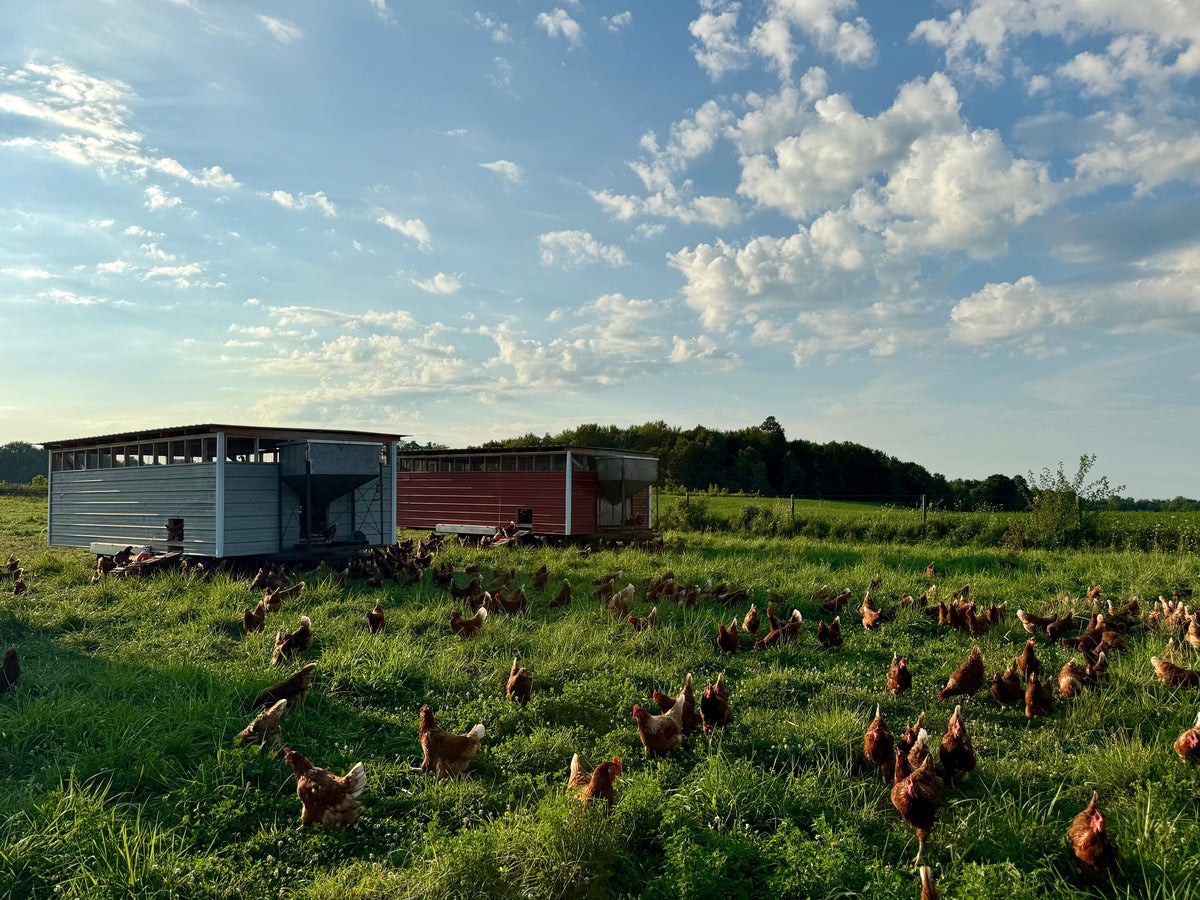
Our hens roam freely at our partnership of small regenerative farms, enjoying pasture, sunlight, fresh air, bugs & our custom-made low PUFA feed.
Our hens roam freely at our partnership of small regenerative farms, enjoying pasture, sunlight, fresh air, bugs & our custom-made low PUFA feed.

2. Hand Collected Daily
Our eggs are hand-collected daily and delivered to our hubs for careful inspection, thoughtful packaging, and prompt distribution to ensure freshness and quality.
Our eggs are hand-collected daily and delivered to our hubs for careful inspection, thoughtful packaging, and prompt distribution to ensure freshness and quality.

3. Delivered to Your Door
Your farm-fresh eggs are shipped within 7 days of being laid, ensuring peak freshness and convenient delivery of the healthiest eggs you can find.
Your farm-fresh eggs are shipped within 7 days of being laid, ensuring peak freshness and convenient delivery of the healthiest eggs you can find.


Frequently Asked Questions
What are pasture raised eggs?
Pasture raised eggs come from hens that have meaningful access to the outdoors, where they can move, scratch, forage, and spend time on grass in the fresh air and sunshine.
But the pasture raised label is only part of the story. Pasture raised tells you where a hen lives, not what she eats.
Chickens aren’t 100% grass-fed. They need feed to get enough energy, protein, vitamins, and minerals to be healthy. In fact, even pasture raised hens typically get 70–90% of their diet from feed, which means what’s in that feed has a big impact on the eggs they produce. Most pasture raised hens are fed diets based on corn and soy, which research and lab testing have shown can lead to eggs higher in omega-6 polyunsaturated fats (PUFAs), even when the hens are raised on pasture.
That’s why our hens aren’t just mobile pasture raised on small regenerative farms. We also make our own custom corn- and soy-free, low PUFA feed in-house.
Because when it comes to producing truly nourishing eggs, we believe both matter: how the hen lives and what she eats.
What is mobile pasture-raised?
Pasture-raised is not regulated, and most 'pasture raised egg' labels at the store come from industrial operations where 25,000+ hens are housed in one large stationary barns with small doors to access the outdoors. Most still spend a majority of their time indoors.
The small regenerative farms that are part of the Nourish Food Club network use mobile pasture raised methods with small flock sizes where the mobile coops are regularly moved to fresh pasture.
Producing healthier pasture raised eggs without drugs and healing the land.
What's the difference between cage-free, free-range, & pasture-raised?
These labels can sound similar, but they can mean very different things for how a hen actually lives. And the label alone doesn’t necessarily tell you much about the nutritional quality of the egg.
Caged hens live confined in cages indoors, without access to pasture or the outdoors.
Cage-free means the hens aren’t kept in cages, but they can still live their entire lives inside a large barn without ever touching grass.
Free-range hens have some access to the outdoors, but that can mean access through small doors to a limited outdoor area that many hens may rarely use.
Pasture-raised hens have access to outdoor pasture, but not all pasture-raised systems are the same. A large stationary barn can still house tens of thousands of hens, with the pasture immediately surrounding it becoming worn down over time.
At Angel Acres Egg Club, we take pasture raised a step further. Our hens are mobile pasture raised on small regenerative farms. Their coops are regularly moved to fresh pasture, giving the hens access to fresh grass, sunshine, bugs, and room to forage.
But it’s not just about raising healthier hens and producing nourishing eggs. The chickens are part of the regenerative farming system. As they move across the pasture, they forage, naturally fertilize the soil with their manure, and then move on, giving that area time to rest and recover. Done well, this cycle can help build healthier soil and more resilient pasture over time.
And remember: pasture raised tells you where a hen lives, not what she eats. Caged, cage-free, and free-range chickens are all eating the same conventional corn- and soy-based high PUFA feed. Even pasture-raised hens still get the majority of their nutrition from feed.
Regardless of where a chicken lives, the feed impacts the quality of the egg. This is why we make our own custom corn- and soy-free, low PUFA feed.
Do pasture-raised eggs contain more nutrients?
All eggs provide valuable nutrition, but the levels of those nutrients are not fixed. What a hen eats and how she is raised can influence the nutritional composition of the eggs she produces.
When chickens are raised outside on diverse pasture, they don’t just eat their feed. They also forage on grasses, forbs, flowers, seeds, insects, and bugs, exposing them to a much wider variety of vitamins, minerals, carotenoids, and other phytonutrients from living plants and insects. Some of these compounds can ultimately make their way into the egg yolk.
This is why eggs from truly pasture-raised hens tend to contain higher levels of fat-soluble vitamins, including vitamins A, D, E, and K2.
Here’s why those levels increase:
- Vitamin D rises with sunlight exposure. Hens synthesize vitamin D when exposed to natural sunlight, and that vitamin is transferred into the egg.
- Vitamin E comes from fresh plant matter and increases when hens consume more living forage.
- Vitamin K2 increases because pasture-raised hens consume vitamin K1-rich grasses and plants, which they convert into vitamin K2 internally and deposit into the yolk.
- Retinol (vitamin A) increases through carotenoid intake. Fresh grasses and plants contain beta-carotene, which hens convert into retinol, the bioavailable form of vitamin A, and store in the egg yolk.
Our eggs were also tested to contain more B vitamins relative to cage-free eggs, as well.
Hens confined indoors eating only a standardized ration without sunlight or diverse forage simply don’t receive the same nutrient inputs. As a result, their eggs may look similar, but they do not deliver the same nutrient density.
This is another reason we believe truly nourishing eggs start with both how the hen lives and what she eats.
Do pasture-raised eggs always have orange yolks?
Yolk color can be misleading when used as a quality indicator since it can be engineered.
Yolk color comes from carotenoids, fat-soluble plant pigments that hens consume and deposit into the yolk. When hens forage on pasture, they naturally consume carotenoids from grasses, forbs, flowers, and insects.
However, pasture access is not the only factor that determines yolk color. Feed formulation plays a major role. In industrial egg production, yolk color has essentially become a paint-by-numbers operation. Specific pigment additives can be added to feed to reliably produce deep orange yolks, regardless of how the hen is actually raised.
That means a hen confined to a windowless barn (eating corn, soy, seed oils, and pigment additives) can still lay an egg with the exact “golden” color consumers associate with quality.
Producers can manipulate yolk color through feed. That’s why color alone doesn’t tell you how a hen lived.
Hens truly raised on pasture do consume a wide range of carotenoids while foraging (from grasses, forbs, flowers, and insects) and those pigments contribute naturally to yolk color. What many people don’t realize is that both yellow and orange yolks contain carotenoids. The difference in color reflects which carotenoids are available and how much the hen is consuming. And those inputs naturally change with the seasons. Cool-season grasses common in early spring and late fall tend to produce lighter, more yellow yolks. Warm-season plants and flowers contribute pigments that deepen yolks toward richer golds and oranges.
This is why eggs from truly pasture-raised hens don’t look identical year-round. Some months they’re darker. Other times they’re lighter. That natural variation is a feature, not a flaw, because real farming follows seasonal cycles.
What does corn- and soy- free eggs mean?
All chickens (even pasture-raised ones) require supplemental feed, which can make up 70–90% of their diet. What they eat has a huge impact on the quality of the eggs they produce.
Corn and soy free means that the feed does not contain corn or soy. Typical commercial chicken feeds, even for pasture-raised hens, often include soybean meal, soy oil, “vegetable oil,” and corn-based ingredients like dried distillers grains. These ingredients are highly unsaturated and loaded with plant-based polyunsaturated fats (PUFAs), especially omega-6 linoleic acid (LA).
Here’s the key point: when a chicken eats more PUFAs, more PUFAs show up in her eggs. That’s a problem because most of us are already overexposed to these unstable fats from vegetable oils and conventional meats, something our ancestors never dealt with in such high quantities.
Unfortunately, many brands advertising “corn and soy free” eggs stop at removing corn and soy... but what do they replace them with?
Often, the substitutes are other high-PUFA seeds and oils, which doesn’t solve the PUFA problem... it just repackages it.
At Nourish and Angel Acres Egg Club we do things differently. We custom formulate our feed to be corn- and soy-free and low in PUFAs, producing eggs with 70% less linoleic acid (omega 6 PUFA) than the nation's leading pasture-raised brand.
When done the right way, corn and soy free eggs can lead to:
- Less unstable fats in your diet
- Lower oxidation and free radical formation
- Fewer hormone-disrupting compounds
- Eggs that are easier to digest
When done right, “corn and soy free” isn’t just an allergen label, it’s a way to restore eggs to the nutrient profile nature intended.
Want to dig deeper? Check out my YouTube video where I explore “Is Corn- and Soy-Free a Scam?”
Are Nourish Food Club eggs corn and soy free?
Yes. Our hens are fed our own custom feed made without corn, soy, or flax. But corn- and soy-free doesn’t automatically mean low PUFA. Many corn- and soy-free feeds simply replace those ingredients with other high-PUFA seeds and oils, which doesn’t solve the PUFA problem. It just repackages it.
That’s why we formulate our feed to be not only corn and soy free, but also intentionally low in omega-6 polyunsaturated fats (PUFAs) and phytoestrogens for better gut, metabolic and hormonal health. We even lab test our eggs to verify the low PUFA egg results.
How are soy free eggs different from regular eggs?
The difference starts with what the hen eats. Soy is one of the most common ingredients in chicken feed and is high in omega-6 polyunsaturated fats (PUFAs) and phytoestrogens (endocrine disruptors). What a hen eats can influence the nutritional composition of the eggs she produces, including the types of fats and phytoestrogens found in the yolk.
That’s why our soy free eggs go a step further. Our hens are fed our own custom feed made without soy, corn, or flax and intentionally formulated to be low in omega-6 PUFAs and phytoestrogens.
And we don’t just rely on the feed label. We test the eggs. Third-party lab testing found our eggs contained significantly fewer phytoestrogens and 70% less linoleic acid, the primary omega-6 PUFA, than Organic Vital Farms eggs.
Soy is also one of the major dietary allergens, and those allergens can pass from the feed into the egg. Interestingly, we hear from many Egg Club members who say they haven’t tolerated other eggs well but are able to enjoy ours without problems. You are what you eat, eats.
What are low PUFA eggs?
PUFAs are polyunsaturated fats, including the omega-6 fat linoleic acid, one of the primary fats found in many seed oils. Low PUFA eggs contain less of these fats than conventional eggs and pasture raised eggs from hens fed standard corn- and soy-based diets. And the difference starts with what the hen eats.
More PUFAs in = more PUFAs out.
The fats in a hen’s diet directly influence the fatty acid profile of her egg yolks. This matters even for pasture raised hens, since 70–90% of their diet still comes from feed. Most chicken feeds are made with ingredients like corn and soy that are high in omega-6 PUFAs, which can result in eggs that are also higher in these fats.
That’s why we make our own custom low PUFA feed, without corn, soy, flax, or other high-PUFA ingredients. And we verify the results with third-party lab testing: our eggs contain 70% less linoleic acid, the primary omega-6 PUFA, than Organic Vital Farms eggs.
Want to learn more about the health consequences of PUFAs and why we intentionally keep them low?
Check out our [blog post] or watch our [YouTube video]!
Are brown eggs healthier than white eggs?
Nope! Brown eggs aren’t automatically healthier than white eggs. Eggshell color is primarily determined by the breed of the hen, not the nutritional quality of the egg. A caged hen eating a conventional corn- and soy-based feed can lay a brown egg, too.
In fact, there can be a lot of natural shell color variation in pasture raised eggs. Depending on the breeds in the flock, eggs can be white, cream, tan, brown, blue, green, speckled, and everything in between. Even eggs from the same breed can vary slightly in shade.
So when comparing brown eggs vs white eggs, don’t judge an egg by its shell. What matters much more is how the hen was raised and what she ate.
How fresh are Nourish Food Club eggs when they ship?
Our eggs are hand-collected daily, sorted, carefully packed, and typically shipped within a week of being laid. We don’t wash our eggs with toxic chemicals, which leaves the egg’s natural protective bloom intact. They come from our network of small regenerative farms, where our hens are raised in mobile coops on pasture rather than one large industrial egg operation.
Because we work with small regenerative farms that raise their birds in a way that’s aligned with nature, egg size, shell color, yolk color, and availability can naturally vary throughout the year. That’s what real farm-fresh food looks like.


Get a closer look of how the chickens are raised on Instagram: