- Traditional Sourdough
- Heritage Grains
- Clean Flour
- Regenerative
- Artisan


- Traditional Sourdough
- Heritage Grains
- Clean Flour
- Regenerative
- Artisan
-
Sourdough
Heritage Wheat
Chemical Free
Build Your Own Sourdough Box Build Your Own Sourdough Box
$120 - $260 -
Heritage Wheat & Ancient Grains
Chemical Free
GMO Free
Build Your Own Flour Box Build Your Own Flour Box
$65 - $90 -
Sourdough
Heritage Wheat
Long Fermented
Sourdough Chocolate Chip Cookie Dough Sourdough Chocolate Chip Cookie Dough
32 oz
Regular price $40.99$40.99 Regular priceUnit price per -
Sourdough
Heritage Wheat
Long Fermented
Sourdough Gingersnap Cookie Dough Sourdough Gingersnap Cookie Dough
32 oz
Regular price $40.99$40.99 Regular priceUnit price per -
-
Sourdough
Heritage Wheat
Pesticide-Free
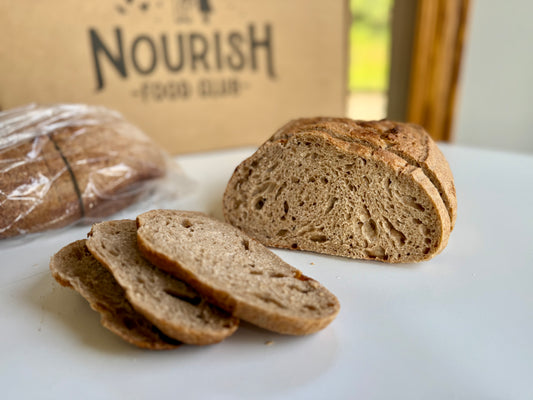
Heritage Wheat Sourdough Artisan Loaf Heritage Wheat Sourdough Artisan Loaf
28-29 oz
Regular price $25.61$25.61 Regular priceUnit price per -
Sourdough
Heritage Wheat & Ancient Grains
Pesticide-Free
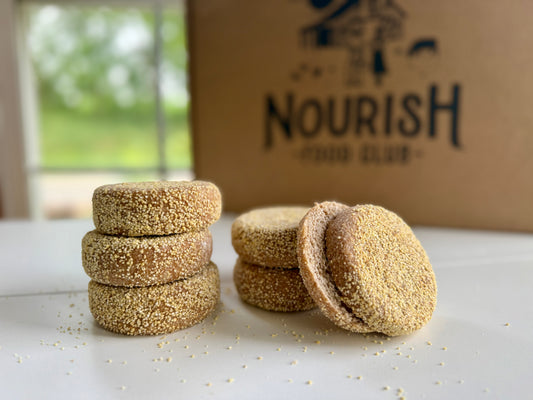
Sourdough English Muffins Sourdough English Muffins
6 muffins
Regular price $27.66$27.66 Regular priceUnit price per -
Sourdough
Heritage Wheat
Pesticide-Free
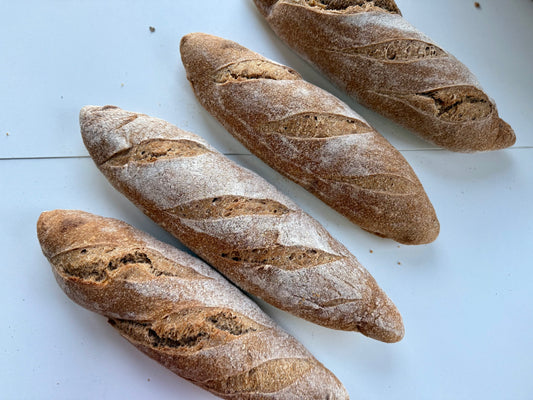
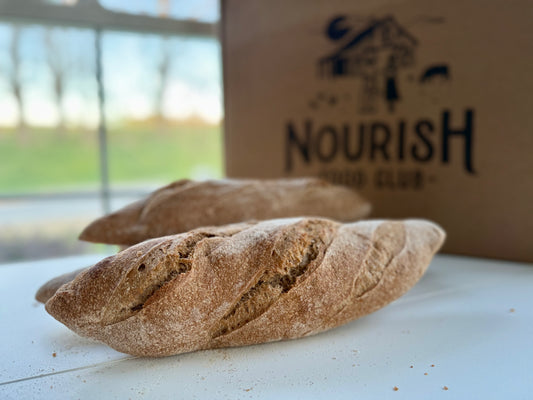
Sourdough Baguette Sourdough Baguette
13-14 oz
Regular price $22.54$22.54 Regular priceUnit price per -
Sourdough
Heritage Wheat
Pesticide-Free
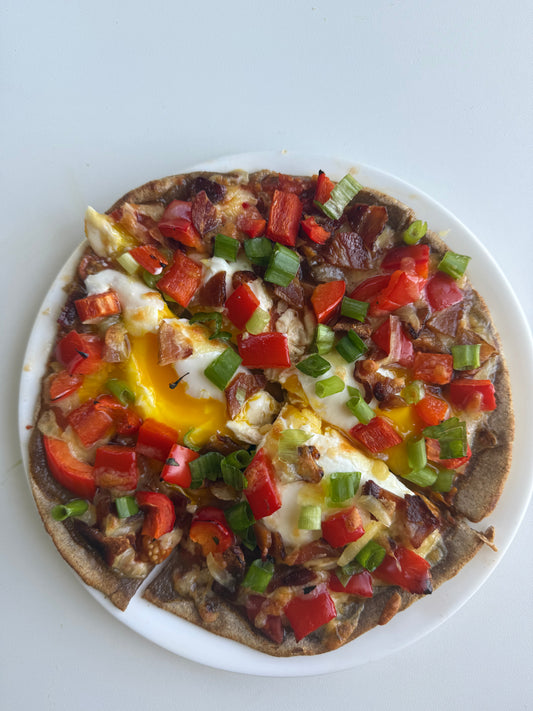
Sourdough Pizza Dough Sourdough Pizza Dough
28 oz
Regular price $25.61$25.61 Regular priceUnit price per -
Sourdough
Heritage Wheat
Pesticide-Free
Sourdough Croutons Sourdough Croutons
8 oz
Regular price $23.77$23.77 Regular priceUnit price per -
Sourdough
Heritage Wheat
Pesticide-Free
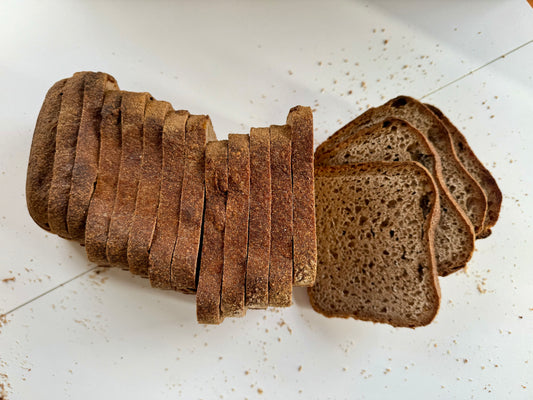
Sourdough Sandwich Bread Sourdough Sandwich Bread
29-30 oz
Regular price $28.69$28.69 Regular priceUnit price per -
Sourdough
Heritage Wheat & Ancient Grains
Pesticide-Free
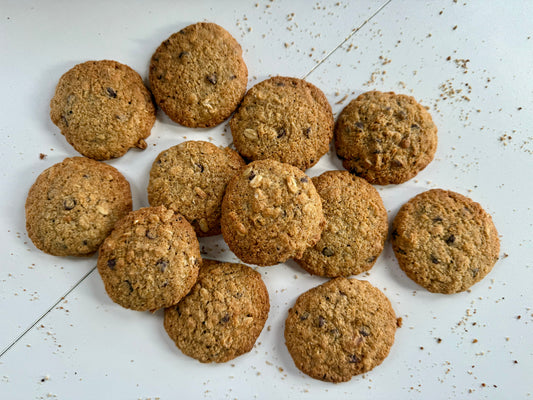
Sourdough Chocolate Chip Sprouted Oat Cookies Sourdough Chocolate Chip Sprouted Oat Cookies
12 Large Cookies
Regular price $29.71$29.71 Regular priceUnit price per -
Sourdough
Heritage Wheat & Ancient Grains
Pesticide-Free
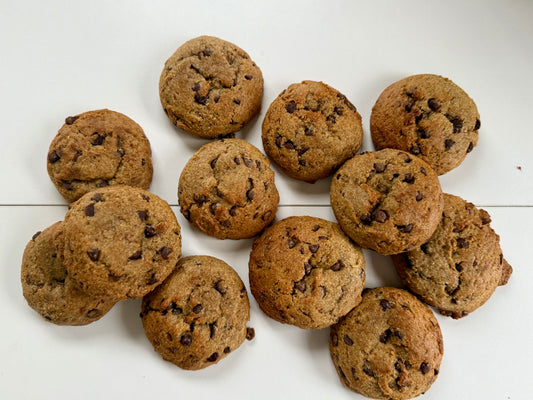
Sourdough Chocolate Chip Cookies Sourdough Chocolate Chip Cookies
12 Large Cookies
Regular price $29.71$29.71 Regular priceUnit price per -
Sourdough
Heritage Wheat & Ancient Grains
Pesticide-Free
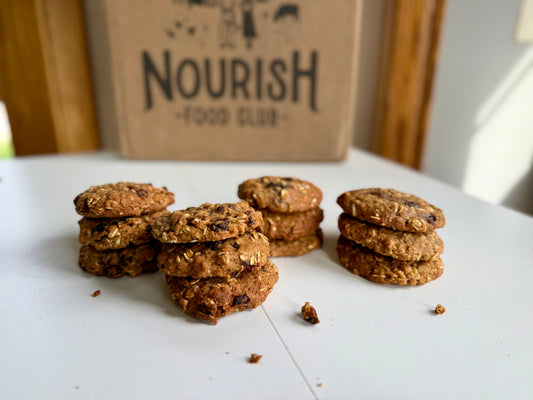
Sourdough Sprouted Oatmeal Raisin Cookies Sourdough Sprouted Oatmeal Raisin Cookies
12 Large Cookies
Regular price $25.61$25.61 Regular priceUnit price per -
Sourdough
Heritage Wheat & Ancient Grains
Pesticide-Free
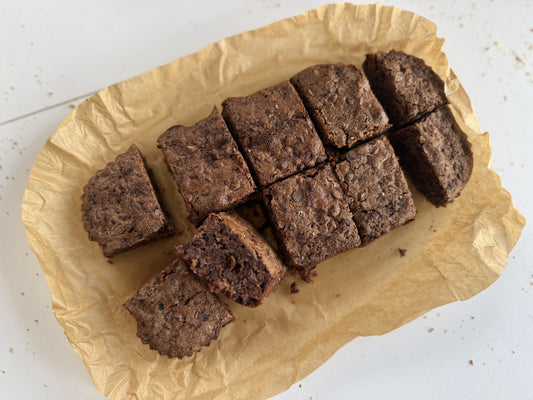
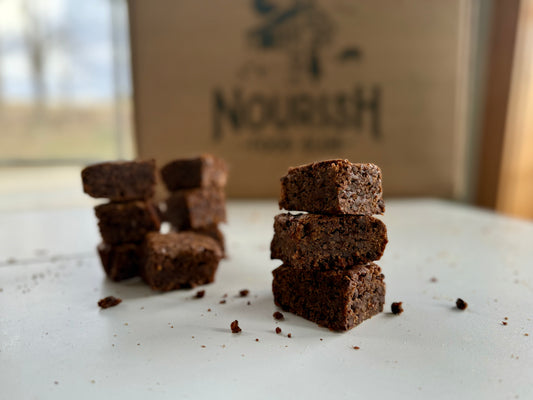
Ancient Grain Rye Sourdough Brownies Ancient Grain Rye Sourdough Brownies
16-17 oz avg
Regular price $30.74$30.74 Regular priceUnit price per -
Sourdough
Heritage Wheat
Chemical Free
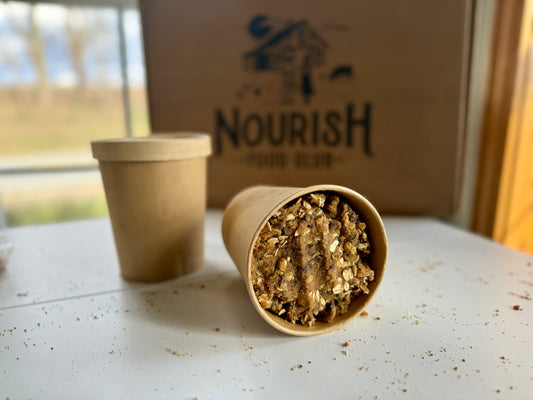
Sourdough Chocolate Chip Sprouted Oat Cookie Dough Sourdough Chocolate Chip Sprouted Oat Cookie Dough
32 oz
Regular price $45.09$45.09 Regular priceUnit price per














Frequently Asked Questions
Why are some sourdough items only available in the Build Your Own Sourdough Box?
Some of our sourdough items are exclusive to the Build Your Own Sourdough Box (which ships separately) because they come from a separate bakery and ship from a different location.
Our full lineup of heritage wheat sourdough products is made by our lovely baker Kristin in Kansas. Her bakery is uniquely positioned right next to the fields where the wheat is grown and the mill where the grain is freshly stone milled. This close connection allows us to keep the flour incredibly fresh and produce baked goods that are more nutrient-dense, flavorful, and true to traditional sourdough methods.
Because of this setup, these items ship from our Kansas hub in their own box, while the rest of your order (like cheese, beef, etc.) ships from our Michigan hub.
The Build Your Own Sourdough Box makes it easy to access these products in one place, so you can mix and match your favorites and experience real sourdough, made the right way.
That said, we do have a few sourdough items made locally near our Michigan hub that can still be added to your cart and shipped with the rest of your orderL like our artisan loaf (made with organic modern wheat, not heritage wheat) and our heritage wheat 32-oz cookie dough containers (chocolate chip and gingersnap).
What are the health benefits of sourdough bread?
But first, what actually is sourdough bread?
Sourdough is the oldest form of leavened bread, dating back over 5,000 years. (Leavened simply means the bread rises because a leavening agent produces gas, creating air pockets that make it light and airy instead of dense.)
Long before commercial yeast packets existed, dough was left out and naturally fermented by wild yeast and beneficial bacteria in the environment. That slow, natural fermentation is what made the bread rise.
Unlike modern bread-making, which often prioritizes speed and shelf life, traditional sourdough relies on time. With just flour, water, and salt, the fermentation process transforms the dough before it’s ever baked. During this slower rise, naturally occurring microbes begin breaking down some of the starches and proteins in the flour. This not only develops deeper flavor and better texture, but can also increase nutrient bioavailability and make the bread easier for many people to digest.
In simple terms, sourdough changes how the flour is processed before you eat it. It alters the structure, the flavor, and how your body handles the bread.
⦁ Easier Protein Digestion: Long fermentation partially breaks down gluten proteins, improving digestibility for many individuals.
⦁ Supports Gut Health: Fermentation modifies fiber structure and generates fermentable compounds that nourish beneficial gut bacteria and support SCFA production.
⦁ Improved Mineral Bioavailability: Activation of phytase reduces phytic acid, increasing absorption of minerals like zinc, magnesium, calcium, and iron.
⦁ Increased Polyphenol Bioaccessibility: Fermentation releases bound antioxidant compounds in whole grains, enhancing their availability.
⦁ Reduced Mycotoxin Levels: Certain sourdough microbes can bind or degrade specific mycotoxins, adding an extra layer of protection.
⦁ Better Blood Sugar Response: Organic acids and structural changes to starch may promote steadier glucose release and fewer dramatic post-meal spikes.
⦁ Structural Modification of Starch: Enzymatic pre-digestion and acidification alter starch behavior, supporting improved tolerance and slower digestion.
⦁ Lower Acrylamide Formation: The acidic fermentation environment can reduce acrylamide formation during baking compared to conventional yeast bread.
You can learn more about the difference between sourdough and modern yeast bread, and the science behind the health benefits in my blog post here.
What makes Nourish sourdough different?
We couldn’t find a heritage wheat true authentic sourdough shop, so we made one!
Most sourdough today is made with refined or enriched white flour from modern wheat.
We chose a different path.
We go back to the traditional way of making sourdough, using heritage wheat, fresh milling, and true long fermentation (without commercial yeast).
Here’s what that looks like:
⦁ 🌾 Heritage wheat grown by regenerative farmers we know and trust
⦁ 🪨 Freshly stone-milled weekly for maximum freshness, flavor, and nutrients
⦁ 🍞 Brought just miles to our baker and made into small-batch sourdough
⦁ ⏳ True long fermentation with a sourdough starter (no shortcuts)
⦁ 🚫 No bleaching, no bromate, no synthetic fortification
This is a true seed-to-loaf system.
Most flour used in bakeries sits on shelves for months. Ours is milled fresh, baked fresh, and delivered to you.
The result: real sourdough with better flavor, easier digestion, better ingredients, more vitamins and minerals, and a level of freshness you simply won’t find in stores.
Does the flour you use for baking have more nutrients?
Yes since the bran and germ remain in our flour (which is where most of the vitamins, minerals and phytochemicals are located). Many modern flour options (unless it is whole-grain) are heavily refined all-purpose flours. We tested our heritage wheat using LightLabs and compared it to an Organic all-purpose flour, and the nutrient improvements were significant! (Since all-purpose and many modern white flours are heavily refined with the bran and germ removed for shelf stability).
Since the flour contains more nutrients, all of our breads and baked goods will as well.

What’s the difference between the two artisan sourdough loaves?
The loaves are similar in process, but different in the grain used. Both are long-fermented sourdough, made the traditional way for better flavor and digestibility.
The key difference is the flour:
- One loaf is made with modern organic refined wheat (offered in 1 and 1.5 lbs). This loaf can be added to the rest of your order.
- The other (only available in the Build Your Own Sourdough Box) is made with our heritage wheat (2 lb loaf) which is freshly stone-milled and retains more of its natural nutrients and flavor
The heritage wheat loaf has a slightly richer, more rustic flavor and a darker crumb due to the whole grain flour.
They also differ slightly in size, but both are delicious, just depends on your preference!
How is your flour milled?
It is freshly stone-milled weekly for maximal nutrients, flavor and freshness.
Once harvested, grains must be milled to transform them into flour. While modern roller mills dominate industrial flour production, we choose the time-honored method of stone milling to preserve the integrity of the grain.
Stone milling is a traditional, slower grinding process that crushes whole grains between two large natural or engineered stones. Unlike high-speed roller mills, which strip away the bran and germ to create ultra-refined flour, stone milling preserves more of the grain’s natural vitamins, minerals, and polyphenols, delivering a flour that is not only more nutritious but also richer in flavor.
Because stone mills generate less heat, delicate nutrients remain intact, and the resulting flour retains a coarser texture with more depth and character.
Many bakers and home cooks find that stone-milled flour produces superior-tasting sourdough bread and other baked goods with a heartier, more satisfying bite.
At Nourish, we are committed to milling methods that respect both tradition and nutrition, ensuring that our flour delivers the highest quality in both taste and nourishment.
Meet your flour miller, Dustin! And the set up used to stone-mill and bag your flour in 100% cotton bags.It is freshly stone-milled weekly for maximal nutrients, flavor and freshness.

Is your flour Organic?
No, and that’s intentional. There are many loopholes in the Organic certification system, so we don’t rely on it or spend money on the label. In fact, you can watch me dive deeper into this and why we intentionally avoid the Organic label in my YouTube video, or my recent YouTube live where I discuss the downfalls of organic and organic imports.
Organic farming practices can sometimes be degenerative, using heavy tillage that degrades soil health over time. Our standards go beyond Organic, ensuring full transparency with our group of regenerative row crop farmers.
We never use toxic pesticides, and we have the lab results to prove it. Tested by an independent third-party lab, Safe Food Alliance, our flour is pesticide-free, screened for over 750 pesticides.

What does ‘heritage wheat' and 'ancient grain' mean?
Our ancestors have thrived on flour and bread for thousands of years. Now, it’s making people sick. What changed?
Modern wheat is…
⦁ genetically altered
⦁ often coated with pesticides
⦁ stripped of natural nutrients during harsh milling
⦁ bleached and bromated
⦁ fortified with iron shards and synthetic vitamins like folic acid.
Unlike today’s hybridized and genetically manipulated wheat, ancient and heritage grains are…
⦁ easier to digest
⦁ contain more vitamins and minerals
⦁ are NOT fortified with synthetic vitamins and minerals
⦁ and are free from genetic modification.
Many people who struggle with modern wheat find ancient and heritage grains gentler on the gut. These grains also offer a deeper, more complex flavor and superior baking qualities compared to conventional wheat.
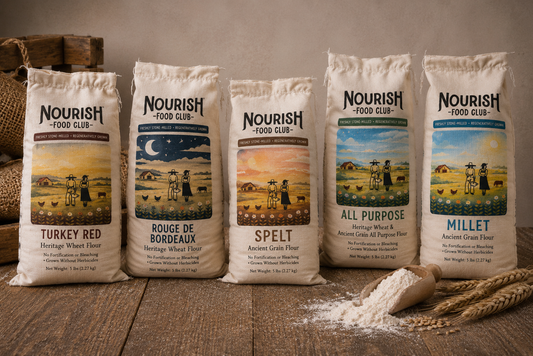
“Ancient grains” refers to grains that have remained largely unchanged for thousands of years. At Nourish, we offer spelt and millet ancient grains.
“Heritage grains” (sometimes called heirloom grains) refer to older grain varieties that were grown before industrialized agriculture and modern hybridization, but they don’t have to be thousands of years old like ancient grains. The are typically regionally adapted and grown and passed down through generations. At Nourish, we offer Turkey Red wheat and Rouge de Bordeaux wheat, both are heritage grains with long traditions in food cultures.
Ancient and heritage grains preserve the integrity of wheat as nature intended, before modern industrial breeding altered its genetics.
Is your flour fortified?
Absolutely not.
(And for context, most modern flour and flour used for many sourdough loaves is. You’ll know if you read an ingredient label and see: “Enriched Flour” or a list like: wheat flour, niacin, iron, thiamin mononitrate, riboflavin, folic acid.)
Modern flour is processed so aggressively that it strips away many of the naturally occurring vitamins and minerals. Then companies try to “fix” this by adding synthetic nutrients back in.
But it’s unrealistic to think we can recreate nature’s design with isolated additives that lack the same bioavailability or synergy.
Here’s what enrichment typically includes:
⦁ Metallic Iron Particles: Conventional enriched flour often contains reduced iron, essentially tiny metal filings. These can contribute to iron overload and oxidative stress in susceptible individuals.
⦁ Synthetic B Vitamins: Instead of the complex, naturally occurring B vitamins found in whole foods, enriched flours use synthetic forms like folic acid. Folic acid must be converted in the body to its active form (tetrahydrofolate). Not everyone performs this conversion efficiently, leaving unmetabolized folic acid circulating in the bloodstream: something that may disrupt natural folate pathways and overall B vitamin metabolism.
At Nourish Food Club, our Non-Fortified Flour keeps its natural nutrient profile intact: free from synthetic additives, industrial iron, and artificial “enrichment.”
We honor the integrity of real food so you get flour as nature intended: rich in genuine vitamins, minerals, and incredible flavor.
Is your flour bromated?
Absolutely not.
What does ‘bromate’ mean? Many conventional flours and baked goods in the U.S. contain potassium bromate: a flour treatment agent used to strengthen dough and promote higher rises. However, this chemical additive has been classified as a possible human carcinogen and is banned in numerous countries, including the European Union, Canada, and the United Kingdom, due to concerns about its potential link to cancer and oxidative damage.
Despite these risks, potassium bromate remains legal in the U.S., where it is often used in mass-produced breads, pizza dough, and other baked goods. Studies suggest that residual bromate can remain in finished products, posing unnecessary health risks.
At Nourish, we take a stand against harmful additives. Our flour is 100% free of potassium bromate, ensuring you get pure, high-quality flour without unnecessary chemical enhancers. We believe real food should be made with real ingredients, just as nature intended.
How is your flour grown?
Our chemical-free heritage and ancient grains are grown using regenerative agriculture practices that work with nature, not against it. That means no pesticides and no heavy tillage.
Instead, our farmers rely on time-honored, soil-building practices such as:
⦁ Diverse crop rotations that break pest cycles naturally
⦁ Cover crops to protect and feed the soil
⦁ Working with the seasons rather than forcing artificial growth
⦁ Living roots in the ground as much as possible to support microbial life
By choosing Nourish Flour, you’re voting with your dollar against the chemical-intensive, industrial agriculture system that depletes topsoil and pollutes our environment.
You’re instead supporting regenerative agriculture, which restores soil health, boosts nutrient density and flavor in food, and reduces pesticide exposure in our environment.
Lab tested to be free of over 750 pesticides!
What salt do you use?
We chose Redmond Real Salt for its balance of quality, mineral content, and sourcing. It comes from an ancient underground deposit in Utah that has not been exposed to modern ocean contamination, which can introduce microplastics. In fact, research has found salts from this region to have among the lowest levels of microplastics. (ref)
Like all unrefined salts, it naturally contains trace minerals, including very small amounts of naturally occurring heavy metals. A popular website claimed it was high in lead, but those results are very contradictory to other independent lab testing. More info here. Testing shows these levels to be low and within safe ranges. Based on the overall sourcing, composition, and supporting data, it’s a salt we feel confident using in our products.
Why is sugar used in some of the items?
If you prefer: our artisan loaves, sandwich loaf, pizza dough, and Honey Oat granola do not contain any added sugar.
We use real, organic cane sugar, nothing artificial or overly processed. Despite what you may hear, sugar itself isn’t inherently “inflammatory,” especially in the context of a balanced diet made up of real, whole foods. It’s been used for thousands of years as a natural sweetener and has played an important role in baking, contributing to both flavor and texture, for centuries.
Ours is sourced directly from the cane plant and provides a simple, familiar sweetness without the need for additives or substitutes.
Are these products gluten free?
No. These products contain gluten and are not safe for those with celiac disease.
However, true sourdough fermentation helps pre-break down the gluten structure and significantly improve digestibility.
Many people find it easier to tolerate and digest it well, but it is still not gluten-free.
You can dive into the science behind why in this blog post.
Is there soy in your chocolate chips?
No, and that’s intentional (since many baked goods these days use chocolate chips with soy in them). We source chocolate chips made the old-fashioned way, without soy or soy lecithin.
That means simpler ingredients and no unnecessary additives. Because of this, our chocolate is more expensive to source, but for us, it’s worth it.
We prioritize clean, thoughtfully sourced ingredients so you can feel confident in what you’re eating.
Is pasture raised beef the same as grass fed and finished beef?
No. Pasture raised beef and 100% grass fed and finished beef are not necessarily the same thing.
Pasture raised describes where cattle live. Grass fed and finished describes what they eat.
Cattle can be raised on pasture for much of their lives and still receive supplemental grain or be moved to a feedlot and grain finished before harvest. So seeing “pasture raised beef” doesn't necessarily mean the cattle ate grass their entire lives.
At Nourish Food Club, we require both. Our cattle are pasture raised AND 100% grass fed and grass finished, grazing grasses and other pasture plants from beginning to end.
And we take it one step further. Our cattle are rotationally grazed using regenerative farming practices, so we're intentionally managing how they move across the pasture, too.
Where they live matters. What they eat matters. And how they're managed on the land matters.
Seed to fork, regeneratively grown, heritage grains

Heritage Wheat Grains Saved from Last Year's Harvest

Grown & Harvested by Regenerative farmers