Corn- and Soy-Free Pork
Pasture-raised pork from regeneratively and humanely raised hogs, drug-free and crafted to be low in PUFAs.

- Low Ps™
- Corn & Soy Free
- Mobile Pasture-Raised
- Drug-Free
- Seed to Fork


- Low Ps™
- Corn & Soy Free
- Mobile Pasture-Raised
- Drug-Free
- Seed to Fork
-
1 $14.13
-
1 $16.49
-
Low PUFA
Corn & Soy Free
Mobile Pasture-Raised
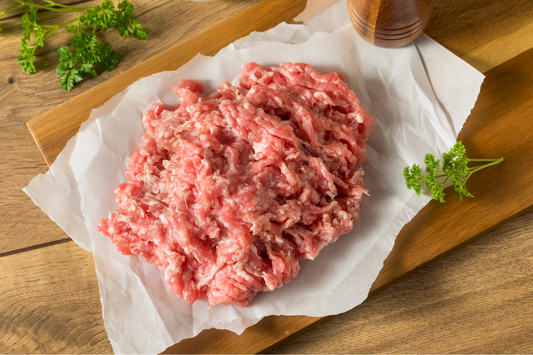
Ground Pork Breakfast Sausage Ground Pork Breakfast Sausage
1 lb
Regular price $15.31$15.31 Regular priceUnit price per -
Low PUFA
Corn & Soy Free
Mobile Pasture-Raised
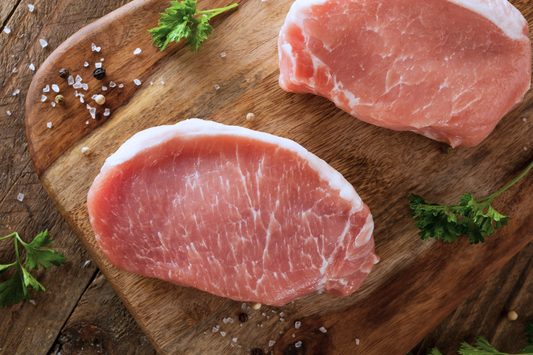
Boneless Pork Chops Boneless Pork Chops
1-1.3 lb avg
Regular price $22.39$22.39 Regular priceUnit price per -
Low PUFA
Corn & Soy Free
Mobile Pasture-Raised
T-Bone Pork Chops T-Bone Pork Chops
1 lb avg
Regular price $19.79$19.79 Regular priceUnit price per -
Low PUFA
Corn & Soy Free
Mobile Pasture-Raised
French-Cut Pork Chops French-Cut Pork Chops
1.5 lb avg
Regular price $23.56$23.56 Regular priceUnit price per -
Low PUFA
Corn & Soy Free
Mobile Pasture-Raised
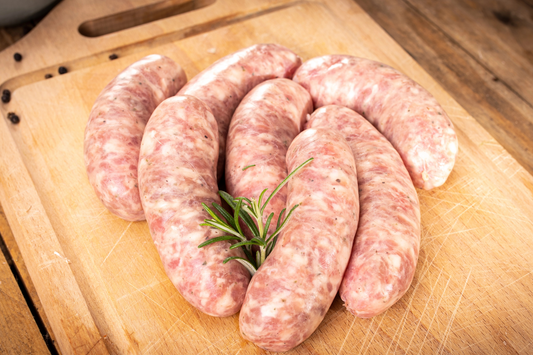
Pork Maple Breakfast Sausage Links Pork Maple Breakfast Sausage Links
1 lb
Regular price $17.67$17.67 Regular priceUnit price per -
Low PUFA
Corn & Soy Free
Mobile Pasture-Raised
Pork Breakfast Sausage Links Pork Breakfast Sausage Links
1 lb
Regular price $17.67$17.67 Regular priceUnit price per -
Low PUFA
Corn & Soy Free
Mobile Pasture-Raised
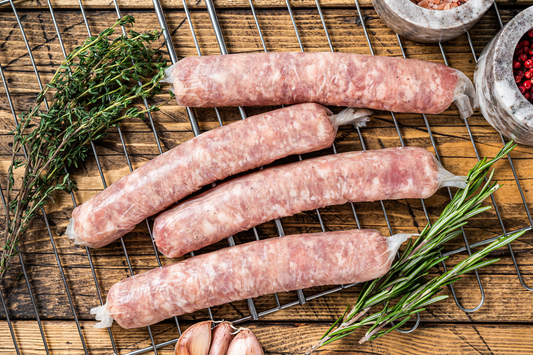
Pork Bratwursts Pork Bratwursts
1 lb
Regular price $16.49$16.49 Regular priceUnit price per -
Low PUFA
Corn & Soy Free
Mobile Pasture-Raised
Pork Tenderloin Pork Tenderloin
14-16 oz
Regular price $35.35$35.35 Regular priceUnit price per -
1 $15.31
-
Low PUFA
Corn & Soy Free
Mobile Pasture-Raised
Chorizo Primal Ground Pork Chorizo Primal Ground Pork
1 lb
1 $15.32 -
Low PUFA
Corn & Soy Free
Mobile Pasture-Raised
Pork Italian Sausage Links Pork Italian Sausage Links
1 lb
Regular price $17.67$17.67 Regular priceUnit price per -
Real Smoke
No Nitrates/Nitrites
Low PUFA
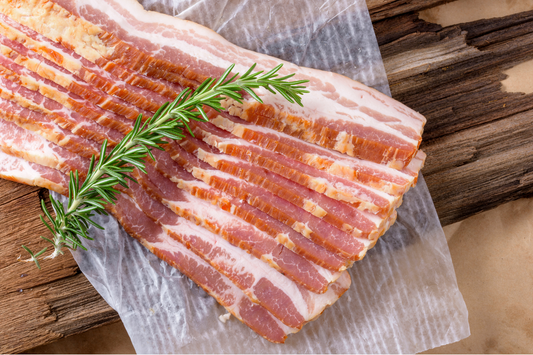
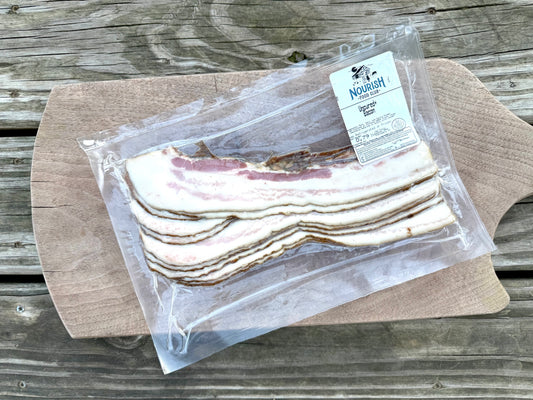
Corn- & Soy-Free Pork Bacon Corn- & Soy-Free Pork Bacon
12 oz
Regular price $23.56$23.56 Regular priceUnit price per -
Low PUFA
Heritage Berkshire Pork
Pasture Raised
12 oz
Regular price $18.44$18.44 Regular priceUnit price per -
Low PUFA
Corn & Soy Free
Mobile Pasture-Raised
Boneless Pork Shoulder Roast Boneless Pork Shoulder Roast
-
-
Mobile Pasture-Raised
Collagen Rich
Canned in Glass
Pork Bone Broth Pork Bone Broth
1 Quart
Regular price $18.96$18.96 Regular priceUnit price per -
-
Low PUFA
Corn & Soy Free
Mobile Pasture-Raised
Pork Baby Back Ribs Pork Baby Back Ribs
1.6 lbs avg
Regular price $49.50$49.50 Regular priceUnit price per -
Real Smoke
No Nitrates/Nitrites
Low PUFA
Pork Bacon (Fatty Pieces) Pork Bacon (Fatty Pieces)
12 oz
Regular price $15.79$15.79 Regular priceUnit price per$18.40Sale priceSale -
Real Smoke
No Nitrates/Nitrites
Low PUFA
Pork Bacon Ends Pork Bacon Ends
12 oz
Regular price $12.97$12.97 Regular priceUnit price per -
Real Smoke
No Nitrates/Nitrites
Low PUFA
Pork Jowl Bacon Pork Jowl Bacon
13 oz
Regular price $14.15$14.15 Regular priceUnit price per -
Low PUFA
Corn & Soy Free
Mobile Pasture-Raised
Pork Collar Steaks Pork Collar Steaks
1-1.2 lbs avg
Regular price $20.03$20.03 Regular priceUnit price per











Frequently Asked Questions
What is pasture raised pork?
Pasture raised pork comes from pigs raised outdoors with space to move, root, forage, explore, and express their natural behaviors.
At Nourish, our pigs aren't raised in confinement barns. They live outside on pasture, where their mobile huts, feeders, and waterers are moved to fresh ground. This gives the pigs clean areas to explore while allowing previously grazed pasture time to rest and recover. They can roam, root through the soil, forage, and enjoy a mud bath, essentially act like pigs!
Our pork also comes from a network of small regenerative farms, rather than one large industrial hog operation. We grow by partnering with more small farmers, not by continually adding more pigs to a single location.
But just like with chicken, how a pig lives is only half the story. Pasture raised tells you where a pig lives. It doesn't tell you what the pig eats.
Pigs aren't grass-fed animals like cattle. They're monogastric animals that can eat grasses, roots, plants, insects, and other foods they find on pasture, but they still rely heavily on supplemental feed to meet their energy, protein, vitamin, and mineral requirements.
In fact, research suggests that pasture-raised growing and finishing pigs commonly obtain approximately 80–95% or more of their nutrition from supplemental feed, depending on how they're raised and managed.
And here's why that matters: pasture-raised pigs and conventionally barn-raised pigs can still be fed very similar corn- and soy-based feed rations. Because pigs are monogastric animals, the fats in that feed strongly influence the fats ultimately stored in their meat and body fat.
That's why our pigs aren't just pasture raised. We also formulate our own custom corn- and soy-free, low-Omega-6 PUFA feed with the fatty-acid composition of the finished pork in mind.
Because when it comes to producing truly nourishing pasture raised pork, we believe both matter: how the pig lives and what the pig eats.
What is the difference between pasture raised pork and heritage breed pork?
They're describing two different things.
Pasture raised pork describes how the pig is raised. The pigs live outdoors with access to pasture where they can move, root, forage, explore, and express their natural behaviors.
Heritage breed pork describes the genetics of the pig. Heritage breeds are traditional pig breeds that have been maintained over generations and are often valued for characteristics like flavor, marbling, hardiness, and their ability to thrive outdoors.
But heritage breed doesn't automatically mean pasture raised, and pasture raised doesn't automatically mean heritage breed.
A heritage pig can still be raised in a barn and fed a conventional corn- and soy-based ration. Likewise, a pig can be raised regeneratively on pasture without being a heritage breed. And neither label tells you what the pig was fed.
At Nourish, our pasture raised pork comes from small regenerative farms and is fed our custom corn- and soy-free, low-PUFA feed, so that we can provide pork meat with significantly lower levels of Omega 6 PUFAs.
We also offer limited quantities of heritage breed Meishan pork seasonally from our own Angel Acres Farm. Meishans are an ancient heritage pig breed, and ours are raised regeneratively outdoors using a mobile pasture system and our custom corn- and soy-free feed.
Is Nourish Food Club pork corn and soy free?
Yes. All of our pasture raised pork is raised on a custom corn- and soy-free, low-PUFA feed that we formulate ourselves and make in-house with our feed mill partner.
But simply removing corn and soy isn't enough. Some corn- and soy-free feeds replace them with other ingredients that are also high in omega-6 polyunsaturated fats (PUFAs), defeating one of the main reasons we formulate our feed this way.
Because pigs are monogastric animals, the fats they eat strongly influence the fats stored in their meat and body fat.
Research shows that conventional pork can have the same amount of Omega 6 PUFAs as Canola Oil.
That's why we formulate the entire diet with the fatty-acid composition of the finished pork in mind.
And we take it one step further. We partner directly with regenerative row-crop farmers to source feed ingredients grown without synthetic pesticides, giving us greater oversight of the feed supply from the field all the way to our pigs.
So when we say corn- and soy-free pork, we're not talking about simply removing two ingredients. We built the entire feed differently from the ground up to produce clean, low-PUFA, pasture-raised pork.
Is soy-free pork the same as corn- and soy-free pork?
No. Soy-free pork simply means the pigs aren't fed soy. They may still be fed corn, corn byproducts, or other feed ingredients high in omega-6 polyunsaturated fats (PUFAs).
One ingredient commonly used in pig feed is distillers dried grains with solubles (DDGS), a byproduct of corn ethanol production. Because much of the corn's starch is removed during fermentation, the remaining nutrients, including corn oil rich in omega-6 linoleic acid, become more concentrated in DDGS.
And that matters because pigs are monogastric animals. The fats they eat strongly influence the fats stored in their meat and body fat. So removing soy while continuing to feed ingredients high in linoleic acid doesn't necessarily produce low-PUFA pork.
That's why our goal isn't simply soy-free pork, or even just corn- and soy-free pork. We formulate the entire diet to be corn-free, soy-free, and low in omega-6 PUFA, with the fatty-acid composition of the finished pork in mind.
Why does pig feed matter?
You are what you eat eats!
Americans consume substantially more omega-6 polyunsaturated fat (PUFA), particularly linoleic acid, than previous generations, which is negatively impacting metabolic health. Seed oils are an obvious source, but there's another source people don't always think about: pork.
Pork can contribute meaningful amounts of linoleic acid to the diet, especially when you consider how many forms of pork we regularly eat: bacon, sausage, pork chops, pork belly, ribs, pulled pork, ground pork, and lard.
So why does pork contain high levels of Omega 6 PUFA linoleic acid in the first place?
First, pigs aren't cows. They can't live on grass alone. Even pasture raised pigs rely heavily on supplemental feed to meet their nutritional needs. Research on pasture-based growing and finishing pigs suggests that approximately 80–95% or more of their nutrition can come from supplemental feed, depending on how the pigs are raised and managed.
In fact, research has found that when pigs have unrestricted access to a complete feed ration, pasture may provide less than 5% of their nutritional requirements in some systems.
And what's in that feed matters tremendously.
Pigs are monogastric animals. Unlike cattle, they don't have a rumen that extensively transforms dietary unsaturated fats through biohydrogenation. As a result, the types of fat a pig eats strongly influence the types of fat ultimately stored in its body fat.
That means a pasture raised pig and a conventionally barn-raised pig can be eating very similar corn- and soy-based feed rations, resulting in surprisingly similar fatty-acid profiles in the finished pork. In fact, research comparing outdoor and indoor pigs fed the same standardized ration has found that pasture access alone had relatively little effect on pork composition.
Feeds containing soy, corn byproducts such as distillers dried grains (DDGS), and other high-PUFA ingredients can provide substantial amounts of linoleic acid, which can then accumulate in the pig's fat.
That's exactly why we developed our own corn- and soy-free, low-PUFA pig feed.
For us, pasture raising and feed formulation aren't competing ideas. Pasture determines how our pigs live. Feed plays a major role in determining the types of fat in the pork you ultimately eat.
What is low PUFA pork?
Not all pork contains the same types or amounts of fat.
Because pigs are monogastric animals, the fats they eat strongly influence the fats stored in their meat and body fat.When pigs eat diets high in omega-6 polyunsaturated fats (PUFAs), particularly linoleic acid, more of those fatty acids can accumulate in the pork you eat.
And the difference can be substantial! Research has demonstrated that changing the fats in a pig's diet can dramatically change the fatty-acid composition of its body fat. In some feeding studies, pork fat has contained surprisingly high levels of PUFAs, approaching those found in certain vegetable oils.
Pasture raised pork can have this same types of fat as conventional pork since the types of fat in both feeds used are very similar.
Low PUFA pork comes from pigs fed a diet intentionally formulated to reduce omega-6 PUFA, especially linoleic acid, in the finished meat and fat.
That's why simply raising pigs on pasture isn't enough. And even corn- and soy-free pork isn't automatically low PUFA. If corn and soy are replaced with other high-PUFA ingredients, the finished pork can still contain relatively high levels of linoleic acid.
So we formulate our entire corn- and soy-free pig feed from the ground up, carefully selecting ingredients based not only on their protein, energy, vitamins, and minerals, but also on their fatty-acid composition.
This is particularly important for pork because we consume so much of the animal's fat directly, whether that's in bacon, sausage, pork belly, pork shoulder, or lard.
That's what we mean by low PUFA pork: we're not just changing the ingredient list. We're intentionally changing the fatty-acid profile of the pork itself.
Does corn- and soy-free pork have less linoleic acid?
It can, but corn- and soy-free pork isn't automatically low in linoleic acid. The important question is: what are the corn and soy replaced with?
Linoleic acid is an omega-6 polyunsaturated fatty acid (PUFA) found in seed oils and many common pig-feed ingredients. Because pigs are monogastric animals, the fatty acids in their feed strongly influence the fatty acids stored in their meat and body fat.
Even feeds marketed as soy-free can contain other high-PUFA ingredients. For example, distillers dried grains with solubles (DDGS), a byproduct of corn ethanol production commonly used in pig feed, can be a concentrated source of corn oil and linoleic acid.
Removing corn and soy can help reduce sources of linoleic acid, but what replaces them matters just as much. A corn- and soy-free feed formulated with other high-PUFA ingredients can still produce pork relatively high in linoleic acid.
That's why we don't formulate our feed around a simple “corn- and soy-free” ingredient claim. We formulate the entire diet to be low in omega-6 PUFA, and then test the finished pork to see if it actually worked.
Our fatty-acid testing found that Nourish ground pork contained 51% less linoleic acid and 47% less total PUFA than the USDA conventional pork reference.
So the short answer is: corn- and soy-free is part of our approach, but low-PUFA formulation and finished-product testing are what tell us whether it actually resulted in lower-PUFA pork.
Is Nourish Food Club pork raised without antibiotics or hormones?
Yes! But there's something important to understand about these claims.
First, added growth hormones are already prohibited in U.S. pork production, so seeing “no added hormones” on a package of pork doesn't tell you much about how that pig was actually raised.
Antibiotics are permitted in conventional pork production under regulated conditions. But we think it's important to zoom out beyond just antibiotics and hormones because those are only two of the pharmaceutical interventions available in pork production. Depending on the production system, pigs may also receive vaccines, dewormers, medications for disease prevention, and other veterinary drugs.
That's why we developed our Needle-Free farming standard.
Our pasture raised pork comes from pigs raised without vaccines, antibiotics, added hormones, dewormers, or other pharmaceutical interventions.
Instead of building routine pharmaceutical interventions into the production system, our small regenerative partner farms focus on supporting animal health from the beginning.
Our pigs live outdoors with room to move, root, forage, and express their natural behaviors. Their mobile huts, feeders, and waterers are regularly moved onto fresh pasture, providing cleaner living conditions, lower-stress environments, and fresh ground while allowing previously grazed areas to rest and recover.
And health isn't just about where an animal lives. Our pigs also receive a nutritionally complete feed with adequate calories, protein, vitamins, and minerals to support healthy growth and normal immune function. We formulate that feed ourselves without corn, soy, or other high-PUFA ingredients.
We believe that when you change how an animal lives, reduce unnecessary stress, provide clean living conditions, and properly nourish it, you can reduce the need to rely on pharmaceuticals to keep it healthy.
Rather than designing a production system around managing the challenges of intensive confinement, we're building one that works with the animals' natural behaviors and needs.
Farm-ing, not Pharm-ing.
Where does Nourish Food Club pork come from?
Our pasture raised pork comes from a network of small regenerative partner farms, rather than one large industrial hog operation.
Our farmers raise smaller groups of pigs outdoors on pasture, where mobile huts, feeders, and waterers are moved onto fresh ground. This gives the pigs space to root, forage, explore, and act like pigs while allowing previously grazed areas to rest and recover.
And we're intentionally scaling differently. Instead of putting more and more pigs on a single farm, we are slowly growing by adding more small farmers to our network.
More small farms. More regenerative farmers. Healthier animals. Healthier land. And better food.
How is pasture raised pork different from conventional pork?
The biggest difference is how the pigs live.
Conventional pigs are commonly raised indoors, while pasture raised pigs have access to the outdoors where they can move, root, forage, explore, and express their natural behaviors. Our pigs live outside on rotating pasture, with mobile huts, feeders, and waterers moved onto fresh ground.
Pasture also gives pigs access to sunlight and a more diverse diet of grasses, roots, plants, and other foods they forage. Sun exposure can increase vitamin D concentrations in pork, while forage can provide additional plant compounds and contribute to differences in the flavor and nutritional composition of the meat.
But pasture raised doesn't automatically mean nutritionally different pork. Feed still matters.
Research comparing pigs raised indoors versus outdoors while eating the same standardized feed ration found relatively small differences in the overall composition of the pork. That's important because pasture-raised and conventional pigs can still be eating very similar corn- and soy-based feeds.
And because pigs are monogastric animals, the fats in that feed strongly influence the fats stored in their meat and body fat.
That's why our pigs aren't simply pasture raised. They're raised on small regenerative farms and fed our custom corn- and soy-free, low-PUFA feed.
For us, producing better pork means changing both how the pig lives and what the pig eats.
What pasture raised pork cuts can I order?
The Nourish Food Club corn- and soy-free pasture raised pork collection includes pork chops, pork tenderloin, shoulder roasts, ribs, bacon, ground pork, breakfast sausage, bratwursts, chorizo, and other sausages, along with nose-to-tail cuts and organ meats.
We also use the bones from our pasture raised pigs to make pork bone broth, traditionally simmered and packaged in glass jars. It's another way we use more of each animal rather than letting nutrient-rich parts go to waste.
Because our pork comes from a network of small regenerative farms, availability changes throughout the year. Some cuts may sell out while others return as new pigs are harvested.
Seasonality doesn't only apply to produce. It's part of working with small farms and whole animals, too.
Where can I buy pasture raised pork online?
You can buy pasture raised pork online directly from Nourish Food Club and have it conveniently delivered right to your doorstep!
Unlike conventional pork, our corn- and soy-free pasture raised pork comes from a network of small regenerative farms where pigs live outdoors on rotating pasture and are fed our custom low-PUFA feed. We even test the finished pork to verify its fatty-acid composition.
From pork chops and bacon to sausage, roasts, ribs, and bone broth, we make it easy to stock your freezer with high-quality pork without having to source from multiple farms.
One virtual farmstand. One checkout. Farm-fresh food delivered to your door.
Shop Our Corn- & Soy-Free Pasture Raised Pork →
Is pasture raised beef the same as grass fed and finished beef?
No. Pasture raised beef and 100% grass fed and finished beef are not necessarily the same thing.
Pasture raised describes where cattle live. Grass fed and finished describes what they eat.
Cattle can be raised on pasture for much of their lives and still receive supplemental grain or be moved to a feedlot and grain finished before harvest. So seeing “pasture raised beef” doesn't necessarily mean the cattle ate grass their entire lives.
At Nourish Food Club, we require both. Our cattle are pasture raised AND 100% grass fed and grass finished, grazing grasses and other pasture plants from beginning to end.
And we take it one step further. Our cattle are rotationally grazed using regenerative farming practices, so we're intentionally managing how they move across the pasture, too.
Where they live matters. What they eat matters. And how they're managed on the land matters.