Sourdough Croutons
Sourdough Croutons
8 oz

Sourdough Croutons
Sourdough Croutons
8 oz
Sourdough
Heritage Wheat
Pesticide-Free
- Real Long-Fermented Sourdough
- Heritage Wheat
- Ready-to-eat
- Clean, real ingredients
- Non-GMO & Regeneratively Grown
- Freshly Stone-Milled for Maximum Nutrition
- Pesticide Free
- No Fortification, Bleaching or Bromate
- No Synthetic Additives & Preservatives
- Description
- Ingredients
- Standards
- Best Uses
Most store-bought croutons are made with refined white flour grown with pesticides, enriched with synthetic nutrients like iron shards and folic acid, then tossed in seed oils and loaded with additives, dough conditioners, and “natural flavors.” No thanks.
Let’s keep the crunch, but lose the chemicals.
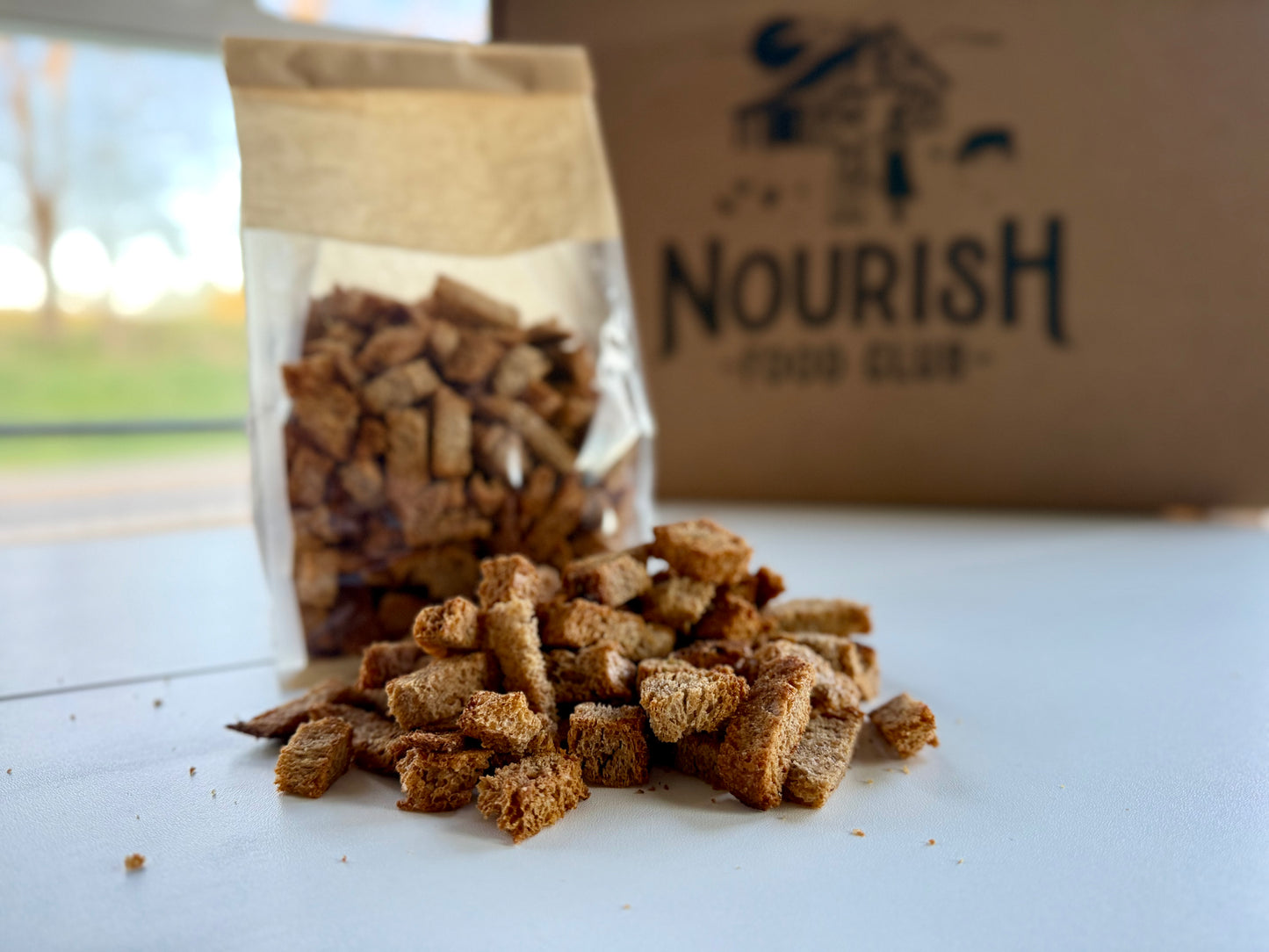
Our sourdough croutons are made from our Nourish sourdough bread, crafted with heritage wheat and true fermentation to improve digestion and enhance nutrient bioavailability. The result? A crouton that’s not just crispy and flavorful, but actually nourishing!
Baked to golden perfection, these croutons deliver that satisfying crunch on the outside with a light, airy bite on the inside. The flavor is rich and savory, with subtle notes of toasted grain, real butter, and herbs: simple ingredients, done right.
Made with pesticide-free, non-fortified, heritage wheat flour that's easier to digest, and zero seed oils, these croutons skip the shortcuts and focus on what matters: real food you can trust.
Higher in nutrient density, easier to digest, and made the traditional way, this is the crunch your salad has been missing. Once you try them, you won’t go back to store-bought croutons.
For storage, store in the freezer for extended freshness (simply grab what you need and let thaw to room temp).
Or keep in the fridge for up to 2 weeks, or on the counter in an airtight container for 5–7 days for maximum crunch.
- Brian R.Verified BuyerRated 5 out of 5 stars6/26/265 Stars
Perfect
- Frank P.Verified BuyerRated 5 out of 5 stars6/4/265 Stars
Great healthy product
- Kimberly C.Verified BuyerRated 5 out of 5 stars5/7/265 Stars
The granola tastes like chocolate toffee candy from Disneyland! I am hooked!
- Todd H.Verified BuyerRated 5 out of 5 stars4/9/265 Stars
Very good. Yumm __
- Todd H.Verified BuyerRated 5 out of 5 stars4/9/265 Stars
Very good. Yumm 😋
Farming Practices
traditional long fermented sourdough
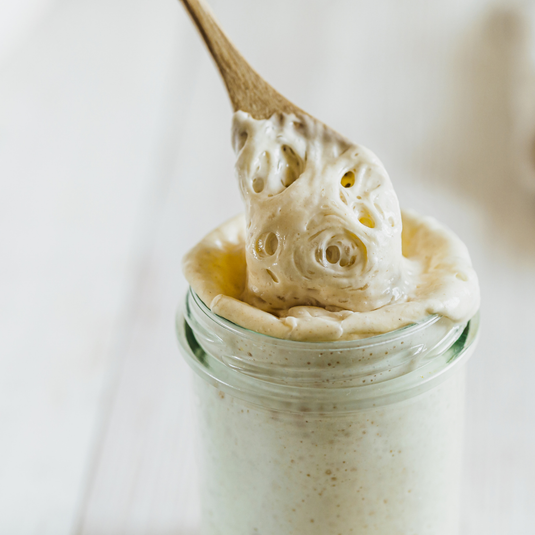
The art of traditional bread-making has largely been replaced by mass production methods that prioritize speed and shelf life, often at the expense of flavor, digestibility, and nutrition. For thousands of years, however, sourdough fermentation was the standard, used to create bread that was both more nutrient-dense and easier to digest. Through the natural activity of wild yeast and lactic acid bacteria, this slow fermentation process transforms the grain at a structural level. Unfortunately, much of what’s labeled “sourdough” at the stores today skips this process entirely, relying on commercial yeast and sourdough 'flavoring' instead of true fermentation.
Our long-fermented sourdough stays true to ancestral, time-honored methods, allowing the dough to fully develop its flavor and nutritional potential. During sourdough fermentation, gluten proteins and complex starches are partially broken down, improving digestibility. Phytic acid is reduced, enhancing mineral absorption, while polyphenols become more bioavailable. At the same time, fermentation produces prebiotic compounds and modifies fiber structure, helping support a healthy gut microbiome.
For many of our customers, this traditionally made sourdough is the only bread they can enjoy without discomfort, offering a more nourishing option that reconnects with the way bread was meant to be made.
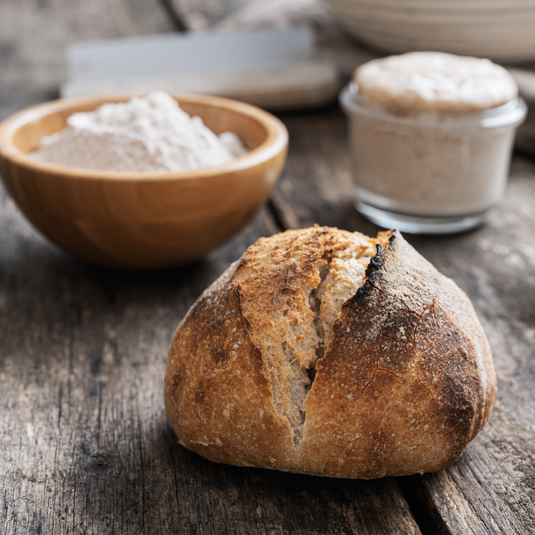
Pure, Unadulterated Flour
Walk down any bread and flour aisle and you’ll see “enriched flour” listed as a staple ingredient. While it sounds beneficial, it actually reflects a highly processed system: modern flour is stripped of its natural nutrients through harsh roller milling, then fortified with synthetic, isolated nutrients. This often includes iron filings and synthetic B vitamins like folic acid, which can disrupt the body’s natural nutrient balance.
Many commercial flours are also bromated (treated with potassium bromate to strengthen dough for industrial baking) a compound banned in several countries due to concerns over carcinogenic residues. Commercial flour is also commonly bleached using chemicals such as chlorine gas or benzoyl peroxide to whiten the flour and alter its protein structure. This process not only changes the appearance but further degrades the natural integrity of the grain and exposes us to more chemical residues.
We choose a different approach, returning to grains your ancestors would recognize. Our heritage wheat flour is free from synthetic fortification, bleaching, and bromation. Instead, it is freshly stone-milled using traditional methods that preserve the full nutrient profile of the grain.
Rather than attempting to rebuild what was removed, we keep the grain whole, delivering flour in its most natural, nutrient-dense form.
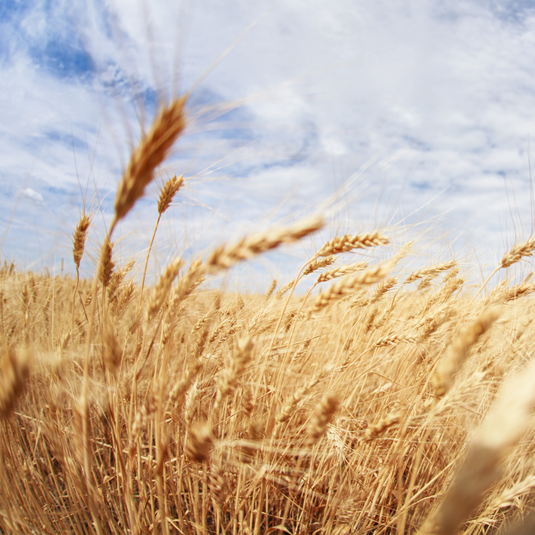
Regeneratively Grown Heritage Grains
The wheat we eat today is quite different from the heritage varieties our ancestors relied on. Over the last century, wheat has been bred for higher yields, disease resistance, and compatibility with industrial processing, rather than for nutritional value or digestibility. These modern varieties can contain fewer nutrients and altered protein structures, making them harder for many people to digest. At the same time, pesticide use has increased, including the common practice of pre-harvest desiccation, where wheat is sprayed with glyphosate shortly before harvest to accelerate drying. This means pesticide residues can end up in our flour and daily bread, compromising digestive health and impacting your gut microbiome.
At Nourish Food Club, we take a different approach. We use heritage grains grown without pesticides by regenerative farmers, preserving the traditional wheat varieties our ancestors ate. These grains are not only more nutrient-dense, but often easier to digest. Cultivated in harmony with the land, they help restore soil health and biodiversity while producing cleaner, higher-quality flour.
The result is bread that honors the past: offering better flavor, improved digestibility, and greater nutritional value.