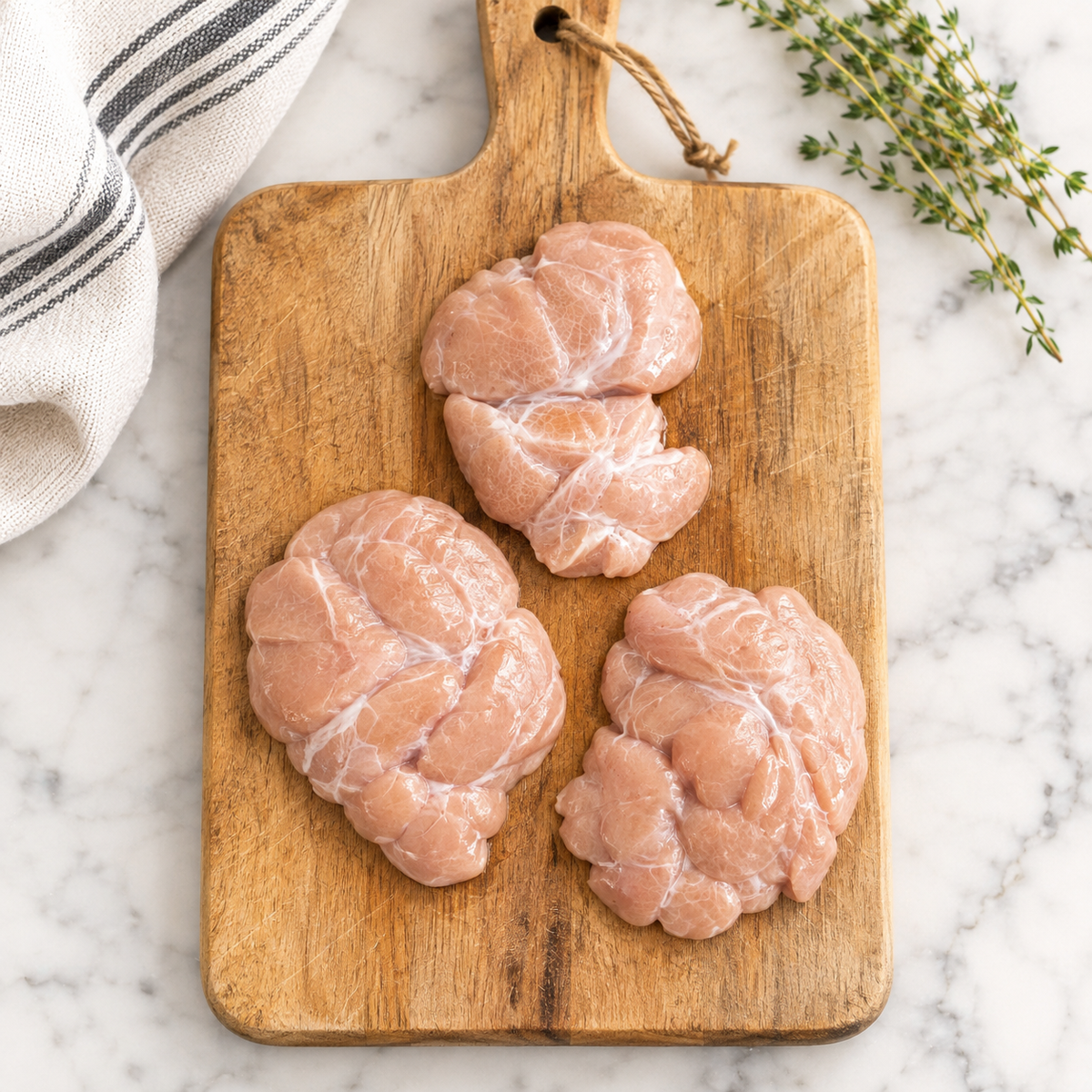
Beef Sweetbreads
Beef Sweetbreads
8 oz avg

Beef Sweetbreads
Beef Sweetbreads
8 oz avg
100% Grass Fed
Regenerative
Needle Free
- 100% grass-fed & finished (no grain)
- Regenerative
- Rotationally grazed on diverse pastures
- Chemical free
- 'Needle-free': NO vaccines, antibiotics, hormones or dewormers
- Maximal nutrition
- Description
- Ingredients
- Standards
- Best Uses
Beef sweetbreads are particularly rich in vitamin C, selenium, and pantothenic acid (vitamin B5), along with other essential vitamins, minerals, enzymes, and cofactors.
If you're new to sweetbreads, don't let the name or the fact that they're organ meats intimidate you! Unlike some other organ meats, sweetbreads have a delicate, mild flavor and wonderfully tender texture.
Try incorporating beef sweetbreads into your meat rotation for a unique way to enjoy the nutritional benefits of nose-to-tail eating!
By choosing our 100% Grass-Fed, Drug-Free beef sweetbreads, you're embracing the traditional practice of honoring the whole animal and making the most of every nutritious part. Our cattle are rotationally grazed on nutrient-rich pastures and never given antibiotics, vaccines, hormones, or unnecessary chemicals.
A traditional preparation method is to soak, blanch, and then pan-sear:
Soak: Place sweetbreads in cold water for several hours, changing the water occasionally to help remove residual blood.
Blanch: Gently simmer in salted water for 5–10 minutes, then transfer to cold water.
Trim: Carefully remove any tough outer membranes, connective tissue, or visible veins.
Cook: Pat dry, cut into smaller pieces if desired, and pan-sear in butter until golden and crispy on the outside. You can also lightly dredge them in flour before frying for an extra crispy crust!
Sweetbreads can also be gently braised, grilled, or incorporated into rich sauces and stews.
The following traditional dishes highlight how different cultures have enjoyed this prized organ meat for generations:
Ris de Veau (French) – A classic French delicacy featuring tender sweetbreads pan-seared in butter and often served with a rich cream sauce, mushrooms, or lemon.
Mollejas a la Parrilla (Argentinian) – Sweetbreads grilled over an open flame until crispy on the outside and tender inside, traditionally served with lemon or chimichurri.
Animelle Fritte (Italian) – Sweetbreads lightly coated in flour or breadcrumbs and fried until golden and crispy, often served with fresh lemon.
Uykuluk (Turkish) – Grilled or pan-fried sweetbreads seasoned with simple spices and enjoyed as a traditional street food or meze.
Braised Sweetbreads (Traditional European) – Sweetbreads gently simmered in broth with onions, herbs, and vegetables until tender, often finished with a rich, savory sauce.
- Kim H.Verified BuyerRated 5 out of 5 stars11/12/265 Stars
Hands down the best chicken I've had in my life, and the only chicken that meets my standards.
- JillVerified BuyerRated 5 out of 5 stars11/8/26OMG - These Carnitas Are AMAZINGLY Good
Carnitas are just about my favorite food in the whole world, with of course, homemade pico de gallo, homemade masa tortillas and and Nourish Cheddar Cheese
The man here had his suspicious chicken look on his face when I started separating the juice, fat and meat.
He thought it was going to be too porky, and too porky smelling while I crisped the meat up in the pork fat.
One of our sons came over to eat and he too was leery of "heavy" pork.
They each ate FIVE FULLY CARNITAS MEAT STUFFED tortillas and couldn't stop taking more. Both of them declared these were, by far, the BEST Carnitas they'd ever tasted. And we all felt terrific after eating a huge meal!
Our family is in love with Nourish food and everyone who works to provide it.
Thank you, thank you, thank you.
- LeonoraVerified BuyerRated 5 out of 5 stars11/7/265 Stars
Best Chorizo in the States.
- Allen C.Verified BuyerRated 5 out of 5 stars11/2/26Whoa!
We love roast beef but this arm roast is beyond our expectations. Incredibly tender, delicious, thick.
Thank you Nourish
- NanetteVerified BuyerRated 5 out of 5 stars10/31/265 Stars
Best
Farming Practices

100% Grass-Fed
Our cattle graze freely on nutrient-rich pastures, consuming the diet nature intended: grass, not grain. This supports their metabolic health and aligns with their natural physiology. In contrast, grain-fed cattle are typically confined to feedlots with limited movement and rapidly fattened on high-energy grain diets, producing meat that differs significantly from what humans historically consumed from wild ruminants.
100% grass-fed practices support healthier animals, and that quality is reflected in the meat you eat. Research shows that grain-fed cattle exhibit elevated glucose metabolites, triglycerides, and markers of oxidative stress (hallmark signs of diabetes in humans), while pasture-raised animals maintain more balanced metabolic function.
By choosing our 100% grass-fed beef, you’re getting a cleaner, more nutrient-dense product, one that more closely resembles the meat our ancestors thrived on, without the added burden of pesticides and phytoestrogen-rich feed common in conventional beef feedlot systems.

Regeneratively Raised
Not all grass-fed beef is the same, how it’s raised matters. There’s a meaningful difference between animals grazing continuously on a single pasture and those raised using rotational grazing. Rotational grazing involves moving beef daily (1-3 times) across fresh pasture, mimicking the natural movement of wild herbivores. This allows the land to recover, improves soil health, increases biodiversity, and ultimately enhances the quality of the meat.
Beef that are rotationally grazed and moved daily to fresh pasture consume a wider variety of nutrient-rich grasses, which can lead to higher levels of vitamins, minerals, and beneficial phytochemicals. These bioactive compounds are associated with anti-inflammatory and overall health-supporting properties, and their presence is directly influenced by the diversity of the animal’s diet. (Research shows none are detected in grain-fed feedlot beef).
This highlights an important point: it’s not just about grass-feeding, but how the animals are managed. While rotational grazing requires more effort, it produces healthier animals, more nutrient-dense meat, and supports a more resilient, regenerative ecosystem.

Free of Pharmaceuticals and Toxic Agrochemicals
Healthy animals don’t need pharmaceutical interventions like vaccines, antibiotics and hormones.
Our cattle are raised in optimal conditions: grazing on fresh pasture, breathing clean air, and regularly moved to new grass, ensuring they aren’t living in their own waste or exposed to toxins. This natural lifestyle eliminates the need for routine antibiotics, vaccines (including mRNA vaccines), hormones, and dewormers. In contrast, conventional feedlot cattle are confined to crowded, unsanitary conditions, requiring constant pharmaceutical support to stay healthy.
By prioritizing regenerative farming practices and animal management, our farmers raise resilient cattle that rarely get sick. Our animals experience minimal parasite exposure, no stress from confinement, and receive optimal nutrition from diverse pastures that supports their immune function and metabolic health. Our needle-free beef offers pure, wholesome meat (just as nature intended) without the pharmaceutical crutches required by industrial agriculture.
Needle free meat - free of vaccines, antibiotics, hormones & dewormers.