Raw Salted Butter
Raw Salted Butter
Raw Dairy
A2-A2
100% Grass Fed
- Raw
- A2A2
- 100% Grass-Fed & Regeneratively Raised
- Produced on Small Farms
- No Chemicals, No GMOS
- No Antibiotics, Hormones, or Vaccines
- Cosmetic Use
- Packaged in a plastic-Free Wrapper made from Wood Pulp
- Description
- Ingredients
- Standards
- Best Uses
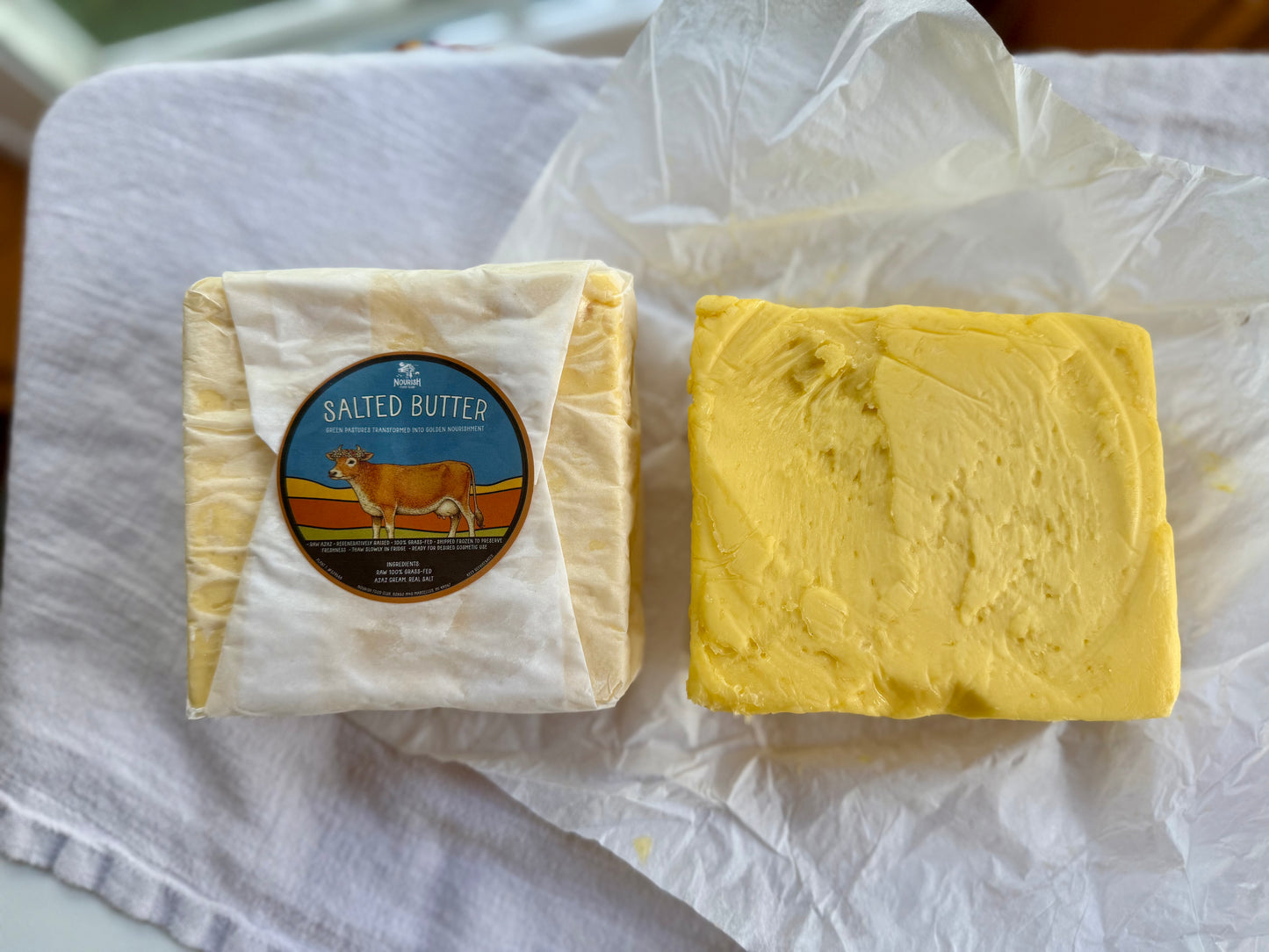
A note on color: Our butter naturally varies from creamy yellow to deep golden throughout the year. During the grazing season, our cows eat diverse fresh pasture, and during the winter, they eat diverse hay harvested from those same fields during the growing season. Certain color-forming plant compounds, particularly carotenoids, can fluctuate with the season and forage, which can change the butter’s color. A lighter color doesn’t mean lower-quality or less nutrient-rich butter. Our cows receive a diverse, forage-based diet year-round.
Never heated, our raw butter retains naturally occurring heat-sensitive and bioactive components found in milk fat, including complex lipids, enzymes, immunoglobulins, and other compounds that can be altered or reduced through processing.
Our butter is also naturally rich in saturated fats, including stearic acid and the odd-chain fatty acid C15:0, while remaining relatively low in polyunsaturated fat. We never supplement our cows with oilseeds or rumen-protected fats specifically designed to alter the fatty-acid profile of their milk.
Because our cows are 100% grass-fed, their diet comes from a diverse array of grasses and other forage rather than grain-based feed. This pasture-based system also provides a variety of naturally occurring plant compounds, including carotenoids and other phytochemicals, that can make their way into dairy.
Our cows are raised in harmony with nature, rotationally grazing diverse pasture throughout the growing season and eating carefully harvested forage through the winter.
The result is simple, traditional butter made from high-quality raw milk: just cream and salt, with nothing else added.
Caution: For Cosmetics -
The government has concluded that raw (non-pasteurized) dairy products may contain pathogens that pose a risk of illness, meaning that consuming raw dairy can significantly increase the likelihood of food borne illness. Accordingly, Nourish raw dairy products are for cosmetic purposes only, and are not intended for human consumption. Our dairy animals are raised using regenerative practices on healthy pastures and healthy environments, and cleanliness and milk testing are our top priority, so these products are produced with the same rigorous human-grade standards.
Did you know your skin is permeable? That means what you put on your skin can be absorbed and then put into circulation, which your body can then use! (Cleopatra and many others in ancient civilizations relied on raw milk baths for her daily beauty routine)
Raw dairy is one of the best cosmetic products you could possibly use, with much higher concentrations of healing building blocks relative to pasteurized dairy cosmetic products since heat treatment can degrade the natural enzymes, immunoglobulins, and other heat-sensitive nutrients.
For best texture, thaw butter slowly in the refrigerator for 12-24 hours before use. If needed sooner, let it sit at room temperature for 1-2 hours until softened. Once thawed, store in the refrigerator for peak freshness.
Ready for your desired cosmetic use.


Farming Practices

100% Grass-Fed & Regeneratively Raised
Our dairy cows graze freely on nutrient-rich pastures, supporting their natural health and metabolism. In contrast, grain-fed dairy cows are confined to feedlots and fattened on grain diets, resulting in excessive fat accumulation and metabolic problems. Research shows that grain-fed cows have elevated glucose, triglycerides, and oxidative stress markers, while pasture-finished animals maintain superior metabolic function.
However, not all grass-fed is the same. Cows raised through rotational grazing are moved between diverse patches of grass, mimicking the natural movement of wild herbivores. This practice enhances soil health, biodiversity, and the nutritional quality of the milk. Rotationally grazed cows consume a wider variety of nutrient-rich grasses, resulting in milk with higher concentrations of vitamins, minerals, and anti-inflammatory, gut-supporting phytochemicals.
By choosing grass-fed, you’re enjoying a cleaner, more nutrient-dense product that mirrors the dairy our ancestors thrived on: free from the fatty acid manipulation and endocrine-disrupting pesticides and phytoestrogens often found in conventional grain-fed dairy.

Raw, with Enzymes & Nutrients Intact
Raw dairy, as Mother Nature intended, has been cherished for thousands of years for its rich nutritional profile. Unlike pasteurized dairy, raw dairy contains higher levels of vitamins, minerals, and vital nutrients that are often destroyed by heat treatment. The natural enzymes and beneficial bacteria, like lactobacillus and butyrate-producing bacteria, are preserved in raw milk, which support the production of lactase in the gut, enhancing lactose digestion and improving overall gut health. Additionally, raw dairy is rich in lactoferrin, a powerful whey protein that plays a critical role in immune health, gut function, and inflammation reduction. Unlike pasteurized or ultra-processed dairy, raw dairy retains its full nutritional value, providing a potent source of health-boosting properties.
Our raw dairy is sourced from rotationally grazed livestock on diverse pastures, ensuring the milk contains not only an abundance of essential vitamins and minerals, but also beneficial phytochemicals: bioactive compounds known for their anti-inflammatory and anti-carcinogenic properties. The nutritional quality of dairy is directly linked to the grazing practices, and livestock that graze on varied grasses and plants accumulate more of these beneficial compounds in milk. By accessing raw dairy from rotationally grazed animals, you are nourishing your body with a truly nutrient-dense food, packed with the goodness that nature intended.

The A2A2 Difference
All of our cow dairy comes from tested A2A2 cows, meaning it contains only the A2 casein protein, which is easier for the body to digest compared to A1 casein found in many modern cow breeds.
Historically, humans consumed A2 dairy from traditional breeds of cows, goats, and sheep, which naturally produce this form of beta-casein. The shift to A1 dairy occurred more recently with the rise of modern commercial breeds like the Holstein. Unfortunately, many cows today produce a mix of A1 and A2 casein, which can be harder to tolerate.
For those sensitive to traditional dairy, switching to A2A2 dairy can provide a smoother, more comfortable experience without the usual discomfort.
The source of your dairy will impact how your body tolerates it.