Does GMO Wheat Exist? Not Yet. But Soon.
GMO wheat isn’t yet grown in the US, but it was approved for use in 2024 so its just a matter of time before yet another toxic ingredient is added to the food supply: GMO wheat with Glufosinate pesticide residue.
A new GMO wheat variety called HB4 was developed by Bioceres Crop Solutions, who holds the intellectual property rights for this “drought-tolerant” GMO wheat, with patent protection secured until 2042.
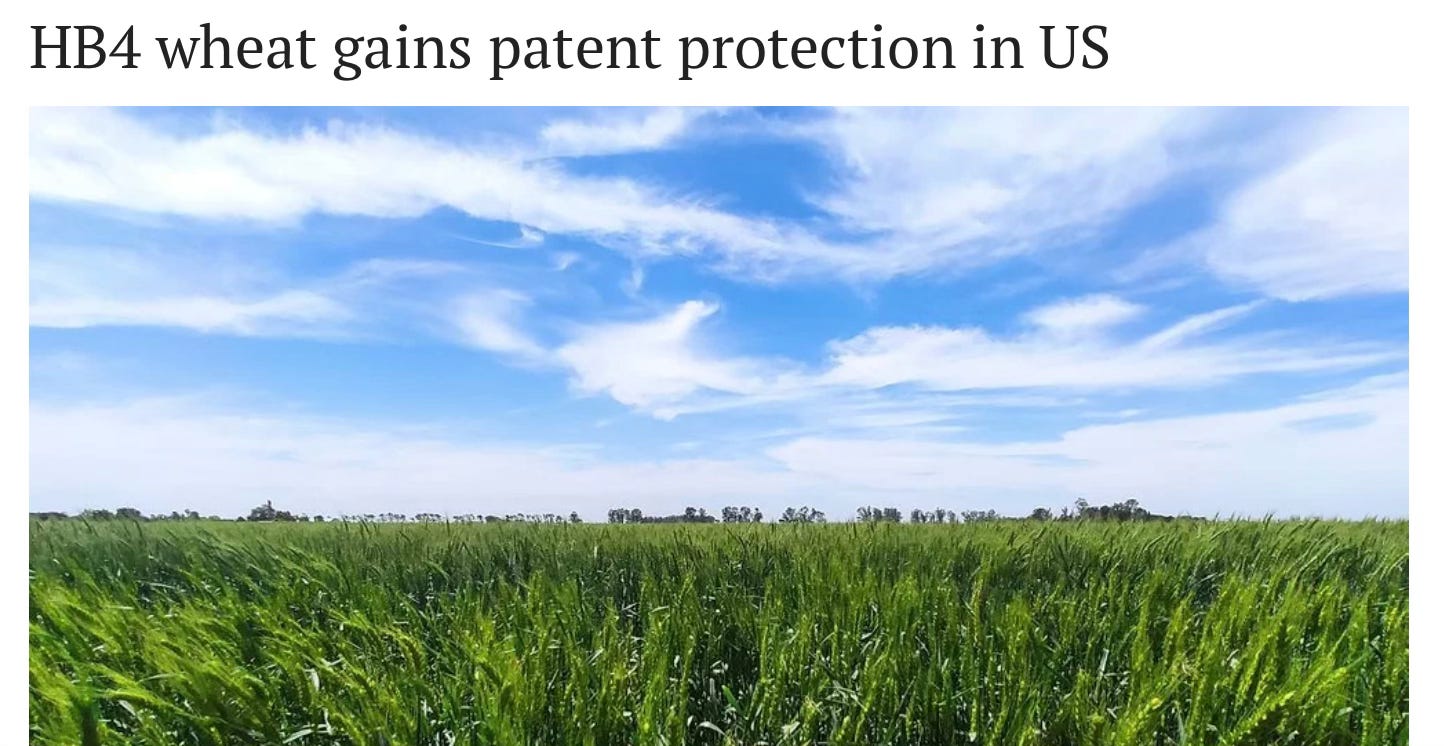
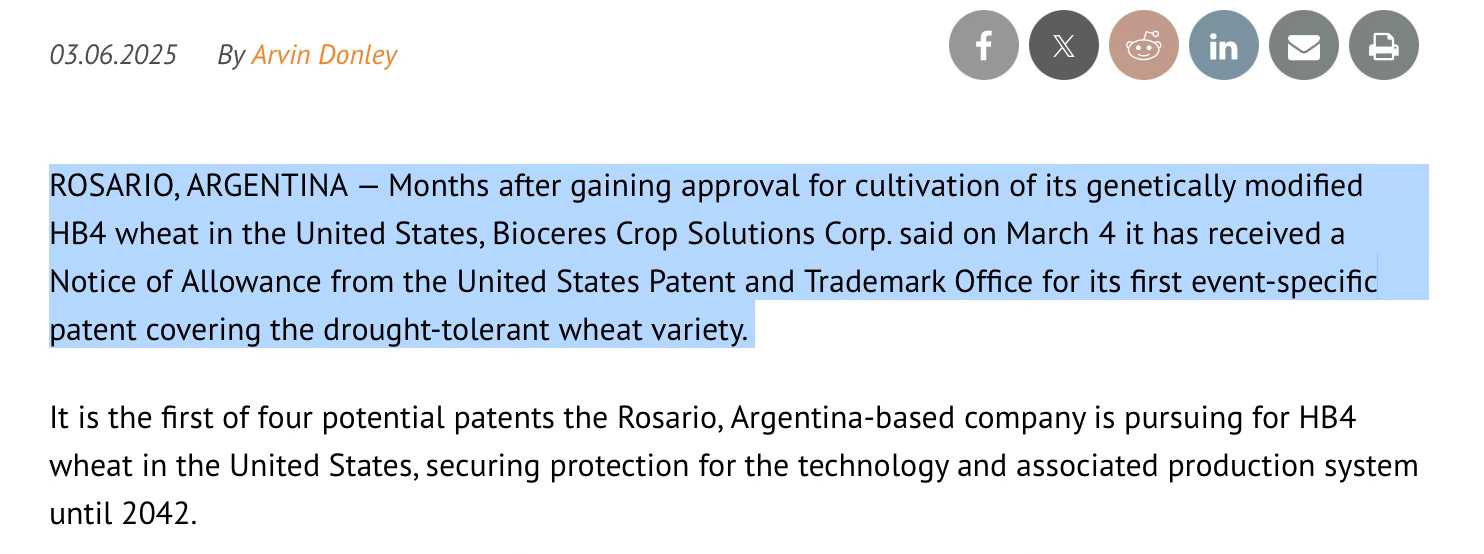
GMO HB4 wheat was approved through a flawed process where regulators did not require independent research and instead relied heavily on voluntary safety data provided by the manufacturer to conclude the crop was safe. Agencies also did not require a thorough evaluation of the cumulative health, environmental, or economic impacts of introducing this crop into the food system. (ref)
The GMO HB4 wheat is marketed as “drought tolerant”, but its most significant trait is that it has been engineered to tolerate the herbicide Glufosinate. This follows the same model used with RoundUp Ready corn/soy… farmers can spray glufosinate across entire wheat fields. The weeds die, while the genetically modified wheat survives, with a nice pesticide coating.
Glufosinate works by blocking an enzyme called glutamine synthetase. While this enzyme is essential in plants, it is not unique to plants. Humans and animals also rely on glutamine synthetase, particularly in the brain, liver, and kidneys.
Because of this, toxicology literature has raised a number of concerns related to glufosinate exposure. Research has linked it to potential neurotoxicity, reproductive and developmental toxicity, birth defects, miscarriages, low birth weight, disruption of the gut microbiome, kidney and respiratory toxicity, and possible DNA damage.
Glufosinate is still approved and used in the United States today. However, it has been banned for agricultural use in the European Union and the United Kingdom, and the EU and France have also restricted imports of foods containing glufosinate residues.
Beyond potential human health impacts, glufosinate can also affect the environment, harming soil organisms, pollinators, and aquatic life, and contributing to water contamination. And just like glyphosate before it, heavy use of glufosinate is expected to eventually lead to herbicide-resistant “superweeds.” When that happens, farmers often respond by applying more herbicides or turning to new chemicals, continuing the chemical treadmill.
(If you want to learn more about Glufosinate and how its use is rising in the food system, I wrote about it previously here).
And the funny thing is the claim used to promote HB4 wheat, its drought tolerance, may not even hold up under scrutiny.
FOE explains (ref):
“To date, GMO crops marketed as drought tolerant have failed to live up to their claims. That’s because editing or adding single genes, such as the sunflower gene associated with adaptation to water scarcity and environmental stressors added to HB4, is an overly simplified approach. Drought tolerance is a complex physiological process in plants governed by a host of genes, biological pathways, and the plant’s relationship to its environment.”
What HB4 wheat does clearly offer, however, is a major opportunity for the agricultural chemical industry. If glufosinate-tolerant wheat becomes widely planted, use of the herbicide would likely increase dramatically. Major manufacturers of glufosinate include Bayer, BASF, Syngenta, and Corteva, along with several Chinese chemical companies rapidly expanding production.
The global glufosinate market is projected to grow from $2.85 billion in 2025 to roughly $4.4 billion by 2030.
This is becoming very big business!
There is an alternative approach with regenerative farming systems that focus on soil health, crop diversity, and ecological resilience, rather than chemical control.
But unlike patented herbicides and genetically engineered seeds, healthy soil isn’t a product you can patent and sell!
Now of course, the current food system doesn’t change easily.
Large agricultural chemical companies spend billions of dollars on lobbying and political influence, working to maintain the centralized industrial food system and shape regulations around pesticide development and approval. Policies often move slowly, and regulatory frameworks frequently favor the continuation of chemical-dependent agriculture.
Which means meaningful change will likely come from the bottom up, not the top down.
Consumers ultimately shape markets.
Every time we choose to support farmers working with nature rather than relying on GMO seeds and heavy pesticide use, we shift demand, little by little, toward a different kind of food system.
If you eat bread/packaged food/baked goods, this is a conversation worth paying attention to! Will be important now more than ever to read ingredient lists and know where ingredients are sourced from.
So whenever possible, support regenerative farmers who are building alternatives to this chemical-dependent model. Farmers who focus on soil health, biodiversity, and resilient ecosystems rather than synthetic inputs.
That’s how food systems change, one farm, one field, and one purchase at a time!
At Nourish Food Club we are on a mission to provide nutrient-rich, non-genetically modified heritage wheat and ancient grains grown without pesticides. Grains your ancestors would recognize! Explore our heritage wheat/ancient grain flours, and traditional sourdough products made from this flour today!