Why Sheepskin Is Such a Timeless Baby Essential
There are certain materials that seem to make more sense the more you learn about them, and sheepskin has become one of those for me.
We have offered sheepskin rugs through Nourish because they are a natural extension of the way we think about raising animals and using what they provide as fully and respectfully as possible. Our lambs are raised on pasture, and rather than allowing a valuable hide to become waste, those hides can be carefully preserved and turned into something useful that may remain in a home for years.
I already appreciated that philosophy before becoming pregnant, but thinking about our own home with a baby on the way has made me look at sheepskin in a much more practical way. Babies spend an enormous amount of time close to the floor, and suddenly qualities like warmth, cushioning, moisture management, durability, texture, and the way a material is processed feel far more important than they once did.
The more I have looked into it, the more I understand why sheepskin has remained such a timeless household material. It is simple, but it does a surprising amount.
A Material With Function Built Into It
One of the things I find most compelling about wool is that so many of its useful qualities come from the fiber itself rather than being added later through manufacturing.
Wool is hygroscopic, which means it can absorb and release water vapor from the air around it. That ability helps it manage moisture without immediately feeling damp. Its naturally crimped fibers also trap air, which gives wool insulating properties while still allowing it to remain breathable.
That combination is part of what gives sheepskin its distinctive feel. When it is placed over a hard floor, it creates a soft, cushioned barrier that helps insulate against the cold surface beneath it without simply acting like a dense synthetic pad.
For adults, that is comfortable. For a baby spending time on the floor, it becomes especially practical.
As I have started thinking about tummy time, early floor play, rolling, sitting, crawling, and all the little stages that eventually happen at ground level, I keep coming back to the idea that the materials surrounding a baby do not need to be complicated to be useful.
A natural sheepskin can create a cozy, movable floor space without requiring a separate foam mat or synthetic play surface that only serves one phase of childhood.
Wool Handles Moisture and Odor Differently Than Many Synthetics
Another reason wool has been valued for generations is the way it handles moisture and odor.
You will sometimes see wool described very broadly as antibacterial. That language can oversimplify things, but wool does have properties that make it particularly good at managing moisture and binding certain odor-producing compounds. That is one reason wool garments often resist odor better than many synthetic fabrics.
For a material that might live in a family room, nursery, reading corner, or supervised baby play area, that matters.
It is also one of the reasons a sheepskin does not necessarily need to be washed constantly. Regular shaking, airing, and spot cleaning can go a long way, which helps preserve the hide over time.
Wool is also naturally flame resistant. It has a relatively high ignition temperature and tends to char rather than melt and drip in the way many synthetic fibers can. These characteristics are not treatments added to wool to make it more functional; they are part of what wool naturally is.
That distinction is important to us at Nourish because our goal is not to take a simple natural material and turn it into something heavily engineered afterward. We want to preserve as much of its original character and usefulness as possible.
Why the Way a Sheepskin Is Tanned Matters
A sheepskin may begin as a beautifully natural material, but the finished product can vary dramatically depending on what happens after the hide leaves the farm.
Tanning is the process that preserves the hide so that it can be used long term, and conventional tanning methods can involve a number of chemical treatments, dyes, and finishing agents.
When we began having our own sheepskins processed, this became one of the most important parts of the process for us.
Our hides come from our 100% grass-fed and finished lambs raised regeneratively on pasture, and they are tanned for us in small batches using a traditional tree-bark tanning method rather than a conventional chemical-heavy process.
That allows us to take something that already exists as part of raising animals for food and preserve it in a way that remains much more aligned with the rest of our farming philosophy.
The hide is not a novelty product created simply because people like the look of sheepskin. It is a valuable part of the animal that can either be discarded or carefully turned into something useful. We would much rather see it become something that lives in a family's home for many years.
Lanolin and the Natural Protection of Wool
Lanolin is another interesting part of the wool story.
It is the natural waxy substance produced by sheep to coat and protect their fleece while they are living outdoors. It helps protect the wool from moisture, friction, dirt, and exposure to the elements.
Some lanolin is naturally removed during cleaning and tanning, so the finished rug's moisture management and durability do not come from lanolin alone. Much of wool's performance comes from the physical structure of the fiber itself.
Still, I think lanolin is a beautiful example of the way wool begins as an already highly functional natural material. Before anyone spins it, dyes it, or turns it into a product, the sheep itself has already produced a fiber with a built-in protective system. Our job afterward is really to preserve that material thoughtfully rather than over-process it.
Why I Keep Thinking About Sheepskin for Babies
Pregnancy has made me much more aware of how quickly the baby industry can convince you that every developmental stage requires a different product. There are play mats, tummy-time mats, nursery rugs, floor cushions, activity mats, stroller liners, and dozens of other products designed for very narrow windows of time.
I know we will inevitably own plenty of baby gear, but I have become much more drawn to things that are not exclusively baby products.
Sheepskin is a good example of that!
For us, I can imagine using one for supervised tummy time and floor play during infancy, particularly during our cold Michigan winter. As our daughter grows, that same rug could move into a reading corner, sit underneath a small table, live beside her bed, or simply become part of the room.
Years later, it could be draped over a chair or used somewhere entirely different in the house.
It does not stop being useful because a baby learned to crawl. That longevity is one of the reasons I think sheepskin makes so much sense for families. It can be part of childhood without being disposable childhood gear.
Wool Sheep and Hair Sheep Are Completely Different
One of the things customers sometimes find surprising is how different our sheepskins can look from one another. Sheepskin does not automatically mean a fluffy white rug.
The final appearance depends heavily on the breed and the animal's natural coat.
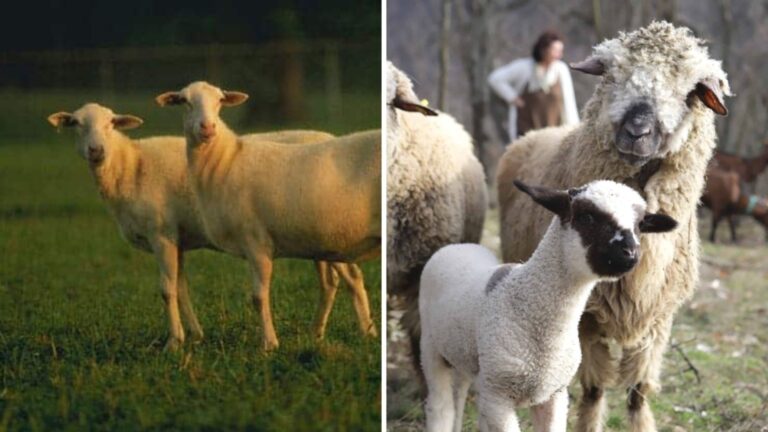
Our wool sheep rugs are the version most people picture when they hear the word sheepskin. They are plush, thick, soft, and fluffy, with the classic wool texture that creates a very cozy surface.
For a nursery, supervised baby floor space, reading nook, or anywhere you want that soft wooly feel, this is probably the style I would choose.
Our hair sheep rugs are much sleeker.
Hair sheep have shorter, flatter, straighter coats rather than thick wool, so the finished hides have more of a traditional animal-hide appearance. They are lower profile and less fluffy, which makes them a beautiful option for people who prefer a simpler or more minimal look.
Neither is more “natural” than the other. They are simply reflections of two different types of sheep. And because these are real hides, no two are identical. Colors, markings, shape and texture all vary.
That individuality is part of what I love about them!
Sheepskin as Part of Regenerative Agriculture
There is a larger reason sheepskin matters to us beyond the material itself. When animals are raised for food, there is an ethical responsibility to think carefully about waste.
Regenerative agriculture is often discussed in terms of soil health, grazing practices, biodiversity, and how animals are raised on the land. Those things matter enormously, but I also think respect for the animal means valuing more than the most obvious portions of it.
A hide is an incredibly useful natural material. Allowing it to become waste simply because synthetic alternatives are cheaper or easier does not make much sense to us.
By preserving the hides from our own lambs, we can create something durable and functional that continues serving a purpose long after it leaves the farm.
There is something full-circle about that. An animal grazes pasture and contributes to the land. It becomes food for a family. Its hide becomes something that may eventually sit beneath another family's baby while she learns to roll over, or beside a child's bed years later.
That feels much closer to the way we want to think about farming.
Caring for a Nourish Sheepskin
Natural sheepskins do not require complicated maintenance, but they should not be treated exactly like a synthetic washable rug. For regular care, one of the best things you can do is simply take the rug outside and give it a good shake. This removes dust, crumbs, hair, and other debris that settle into the fibers.
Because wool naturally manages moisture and odor well, frequent full washing is usually unnecessary.
If something spills, we recommend spot cleaning with cool water and a gentle soap whenever possible.
For our particular tree-bark-tanned Nourish sheepskins, we recommend washing as little as possible and avoiding the washing machine entirely. Different tanning processes can result in different care requirements, so it is always best to follow the recommendations that come with the specific hide you own.
Why I Think These Will Stay in Our Home for Years
Before pregnancy, I mostly thought of sheepskin as a beautiful natural rug.
Now I think about it differently. I think about the fact that our daughter may spend time lying on one before she can sit up. I think about her learning to crawl across it, eventually sitting on it with books or toys, and perhaps someday having it beside her bed.
I also think about the fact that none of those stages require the rug to become something different.
It is just sheepskin. That is part of why it has remained useful for so long.
There are plenty of modern baby products we will probably be grateful to have, but I find myself increasingly appreciating materials that do not need to be reinvented for each generation.
Wool has kept people warm, protected them from the elements, cushioned floors, covered beds, and lived inside homes for centuries. Sometimes the simplest material really does continue to work.
And for us, knowing that ours begins with animals raised here on pasture, is preserved through traditional tree-bark tanning, and can then become part of another family's home makes it even more special.